To continue along with my journey through the Galapagos, we left San Cristobal and took a rocky 3.5 hour boat ride to Isla Floreana. The waves were quite big, and the anti-sea sickness medicine most of us took put us all to sleep! On the way over Cesar still pointed out some cool animals we passed, and I am happy that I saw a white albatross flying over the open water.
With a population of 150 people, Floreana is a sleepy little island. Our first stop was for lunch at a very sweet woman’s restaurant, of course featuring fresh tuna fish. My favorite was the handmade coffee ice cream.
Our main activity was a visit to the black sand beach, Playa Negra. We donned our snorkeling gear again, and to my absolute delight we were able to swim with Galapagos penguins! They are little torpedoes under the water, and they didn’t stick around us very long, but I caught one on my GoPro! I also saw a very cool underwater yellow with black polka dots sea snake… and just now when I googled it learned that it is very poisonous. On this snorkel I saw quite a few colorful fish, sea turtles, and Cesar also showed us a giant hermit-type crab with a really cool shell.
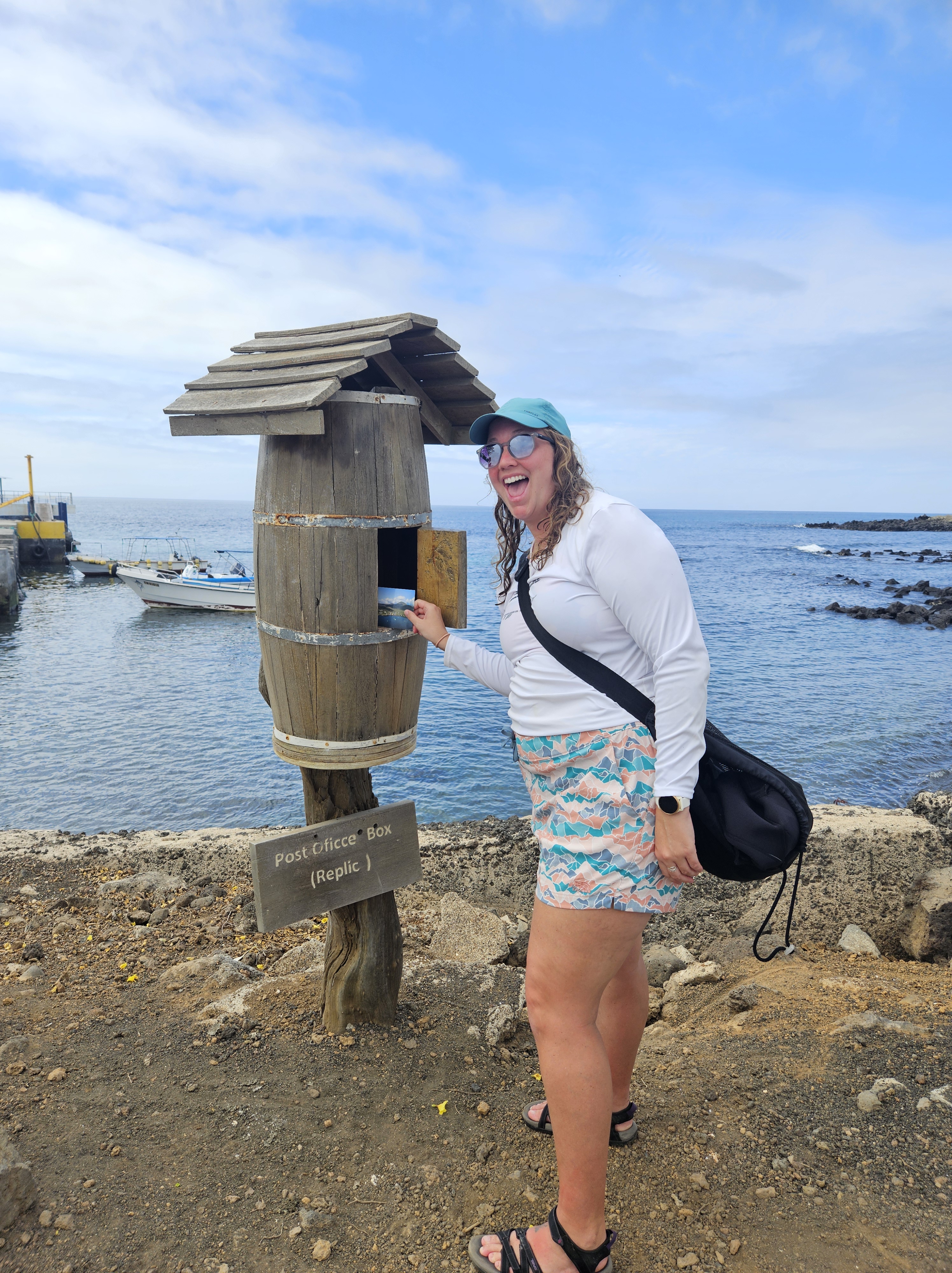
I sent a postcard in the post office in a barrel that requires no stamps. Cesar told us that this has been functioning since the 1700s- you put a letter/postcard inside and then if someone visits that is going to that location, they take it with them and hand deliver it. We all looked through the ones that were there, and none of them were where we were going. There was one in Porto Alegre (Brazil) and I said I can take it and mail it in Brazil, and Cesar said “NO! That is NOT how it works! It must be hand delivered.” My group was very skeptical, but I sent a postcard to my dad… we will see if/when it arrives! Cesar swears that it will.
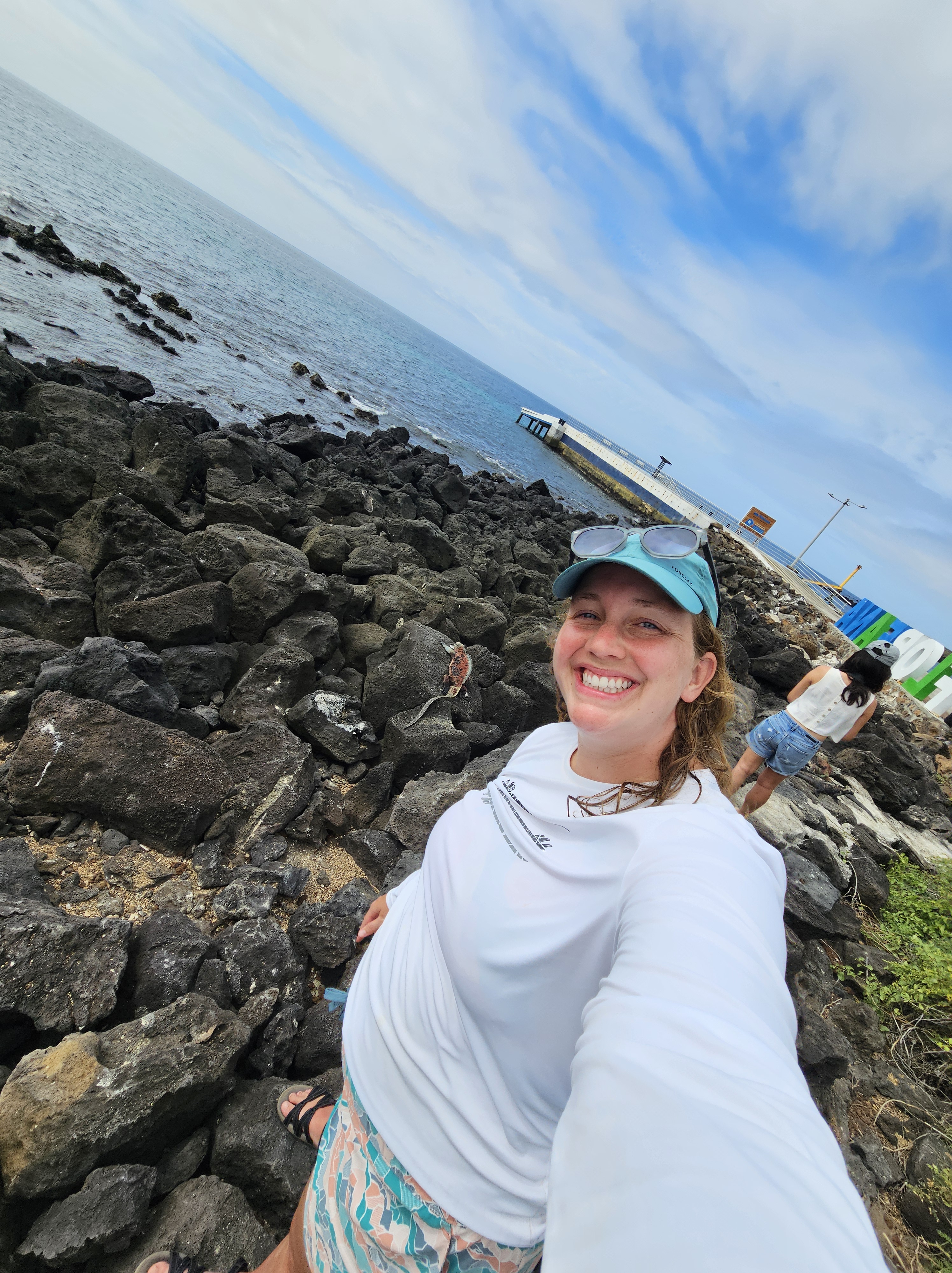
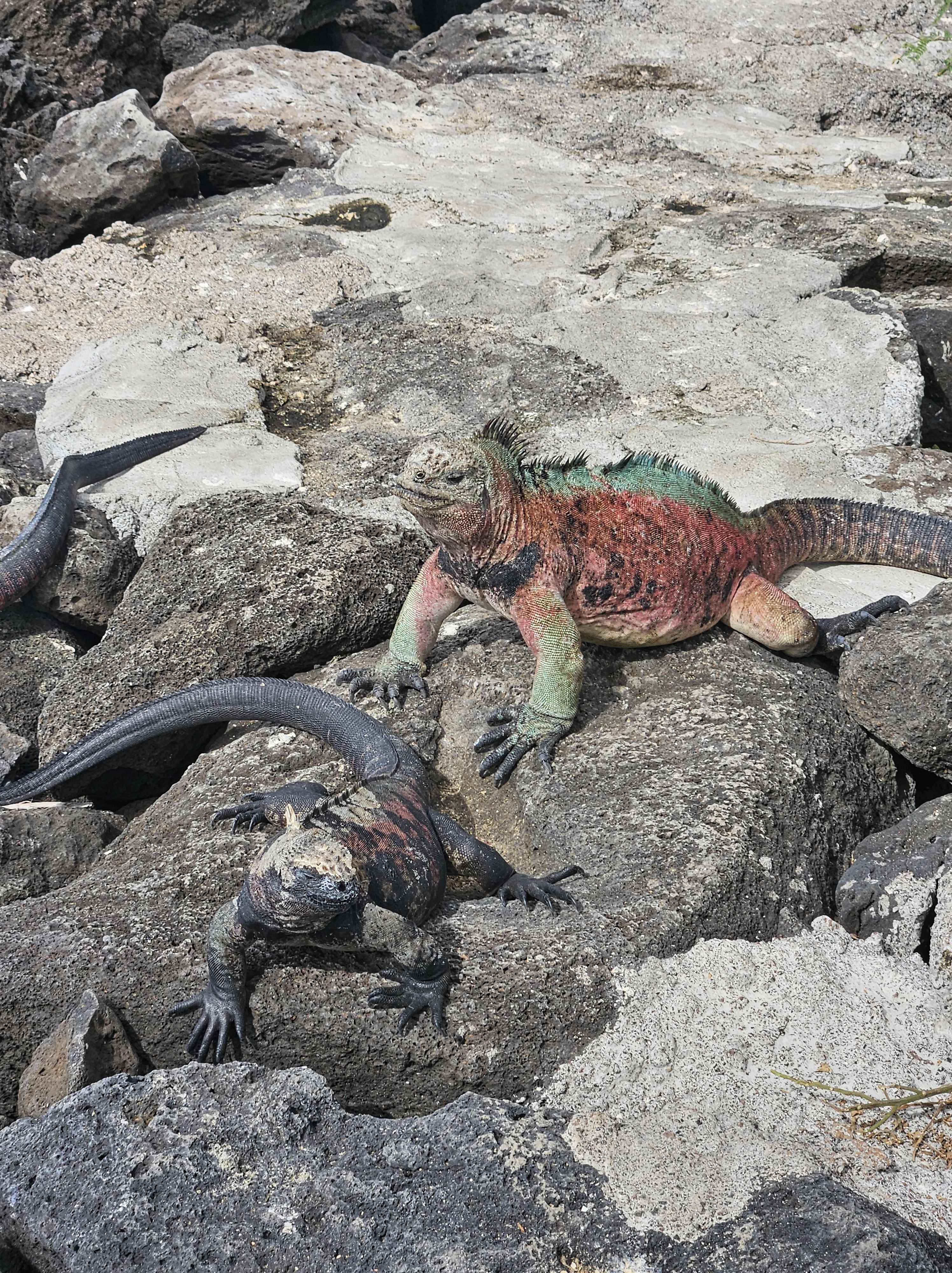
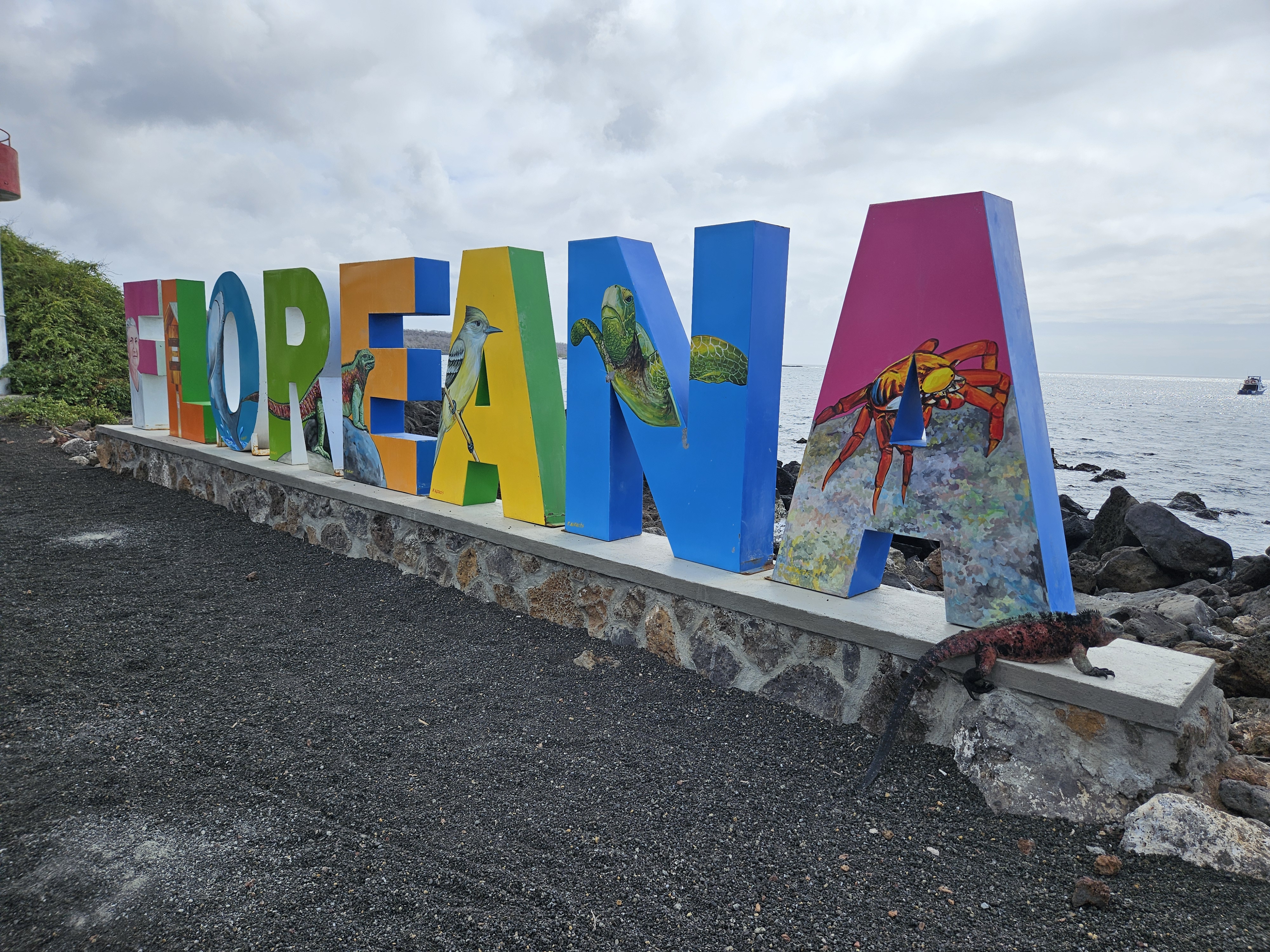
We saw “Christmas Iguanas” here because of their colors- red and green. These marine iguanas get their colors based on the types of algae they eat. I thought they looked very festive for the season I was traveling in. Way to be on theme.
Of the species we saw, most of the times the colorful of the pair were the males. In nature, it seems, males try to impress the females. Also on Floreana we got to watch National Geographic in real life. The male iguanas did a lot of head bobbing when another male approached, as if to signal to “back off” and there was also a lot of spitting to mark their territory. We didn’t see any fight, but we did see some bigger iguanas intimidate others who were trying to make their way through. The head bobbing was my favorite part to see.
We jumped back on the boat for a 1 h 45 min boat ride to land on Isla Isabela. (We learned that this trip used to just go straight for the 5 hour boat ride but the guides convinced them to stop on Floreana to help break it up. I am really glad they did not just for the sake of a break but also because of the Christmas iguanas!) On arrival we settled into our hotel, had a nice dinner and prepared for a big day the next day.
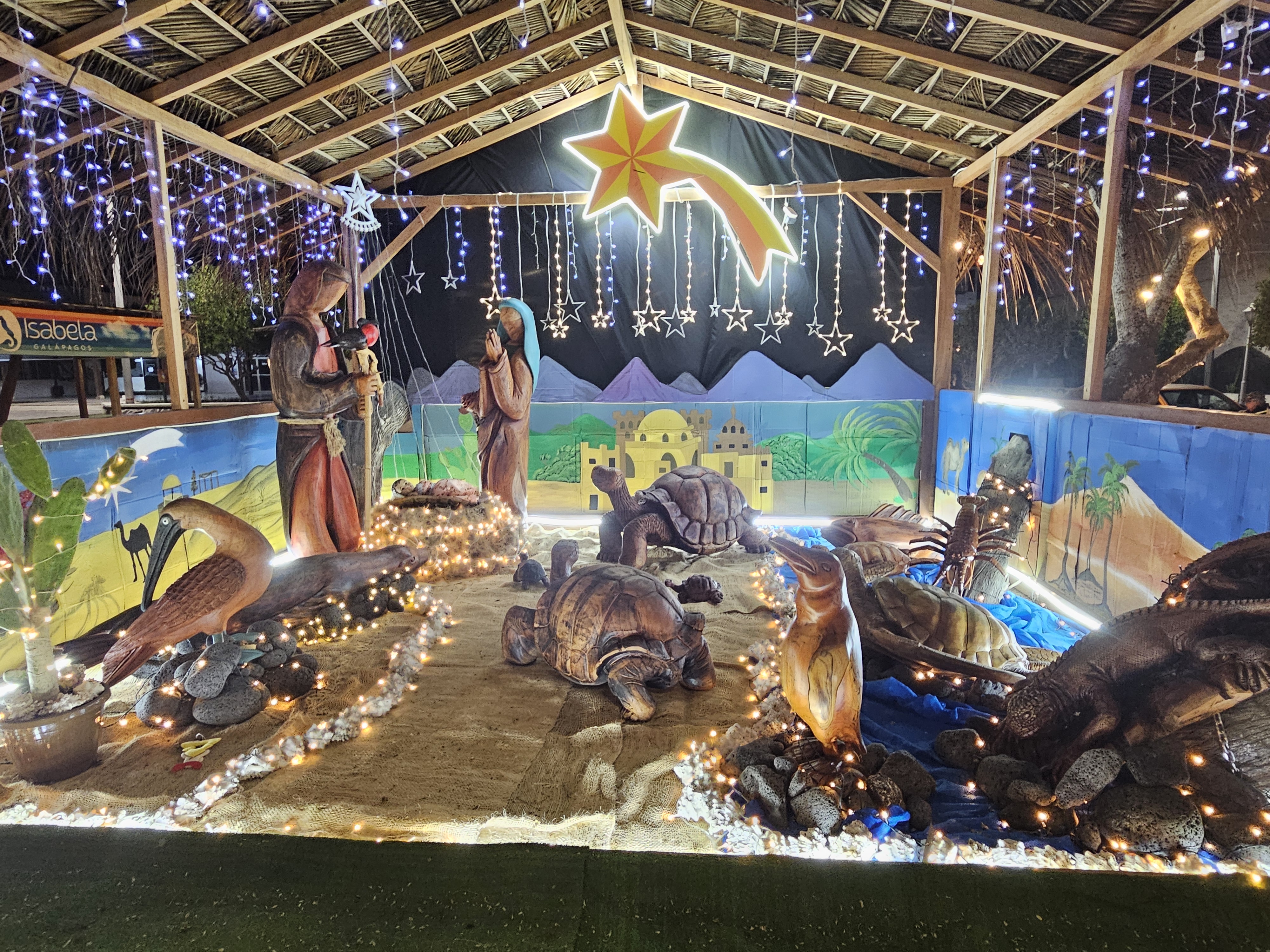
Isla Isabela is the largest of the islands in the archipelago and it looks like a seahorse shape! It has less than 2,000 people who live there, and it definitely feels like a small beach town.
Our morning started with a brief walk around the mangroves at the Perla da Concha as just a teaser for the first day. We saw some iguanas and sea lions. Then we walked over to get outfitted for a kayaking trip. Right from the pier we headed to the islotes (just little bitty islands made of volcanic rock) where we saw quite a few marine iguanas, sea lions, and my favorite- a pelican nest. The pelicans are huge. Kayaking was fun but a little stressful when you are with a stranger you just met and you need to be a polite communicator. I was in the back and I was steering, but then the person I was with kept trying to steer, and I found myself getting a little frustrated. Communication is important, but I felt nagging… the kayaking didn’t last too long, so it was fine. When we pulled into the beach we saw pelicans, blue footed boobies, and penguins all feeding in the water. It was wild!
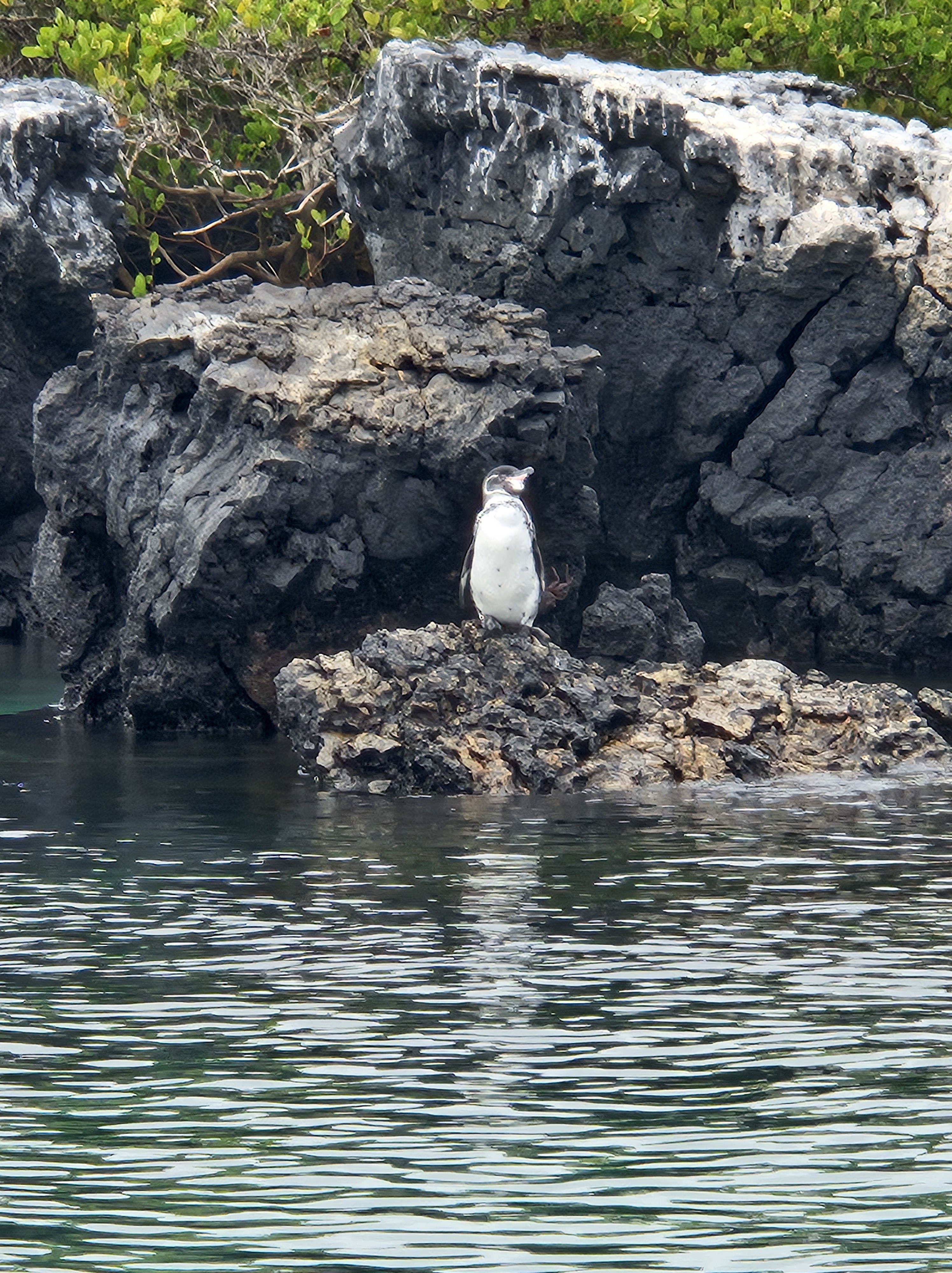
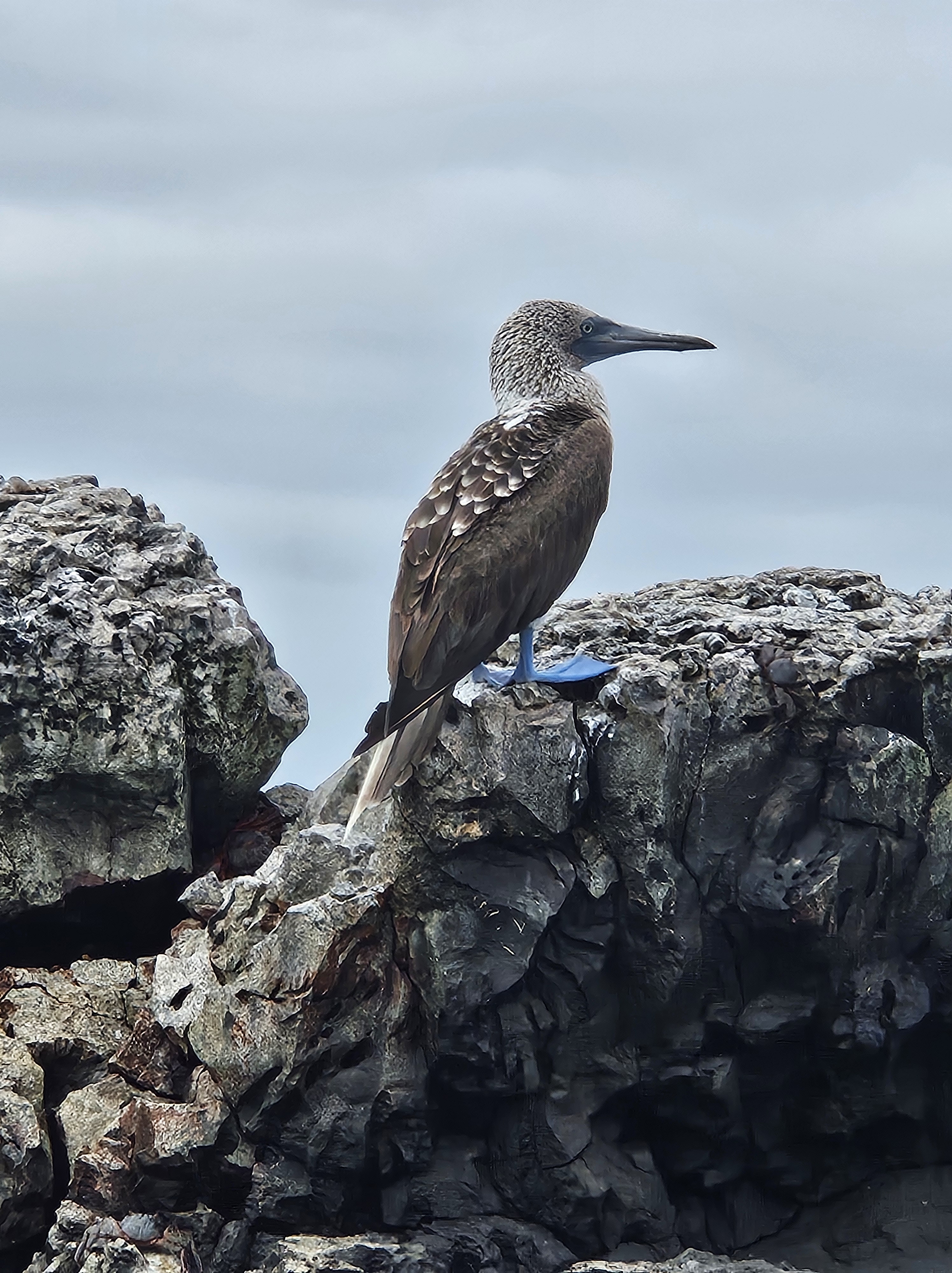
On a bird watching boat ride, we saw two Galapagos penguins, and quite a few blue footed boobies. Blue footed boobies are very cool. The darker blue feet are the females, and the more turquoise ones are the males. Boobies fish and they dive really fast into the water, which I saw a few different times. I also feel like the blue footed boobies are symbols of the Galapagos (along with the tortoises, which we will get to).
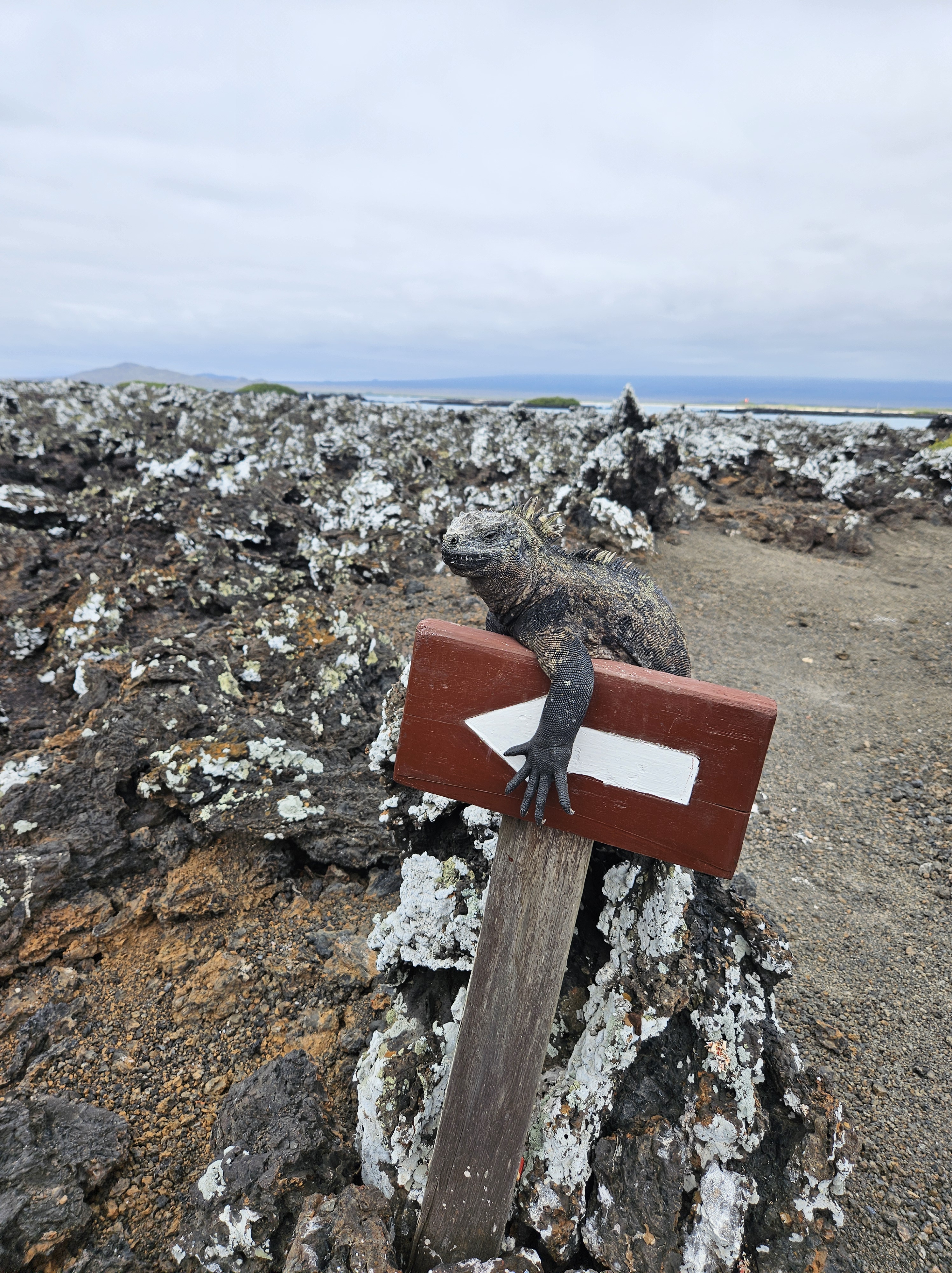
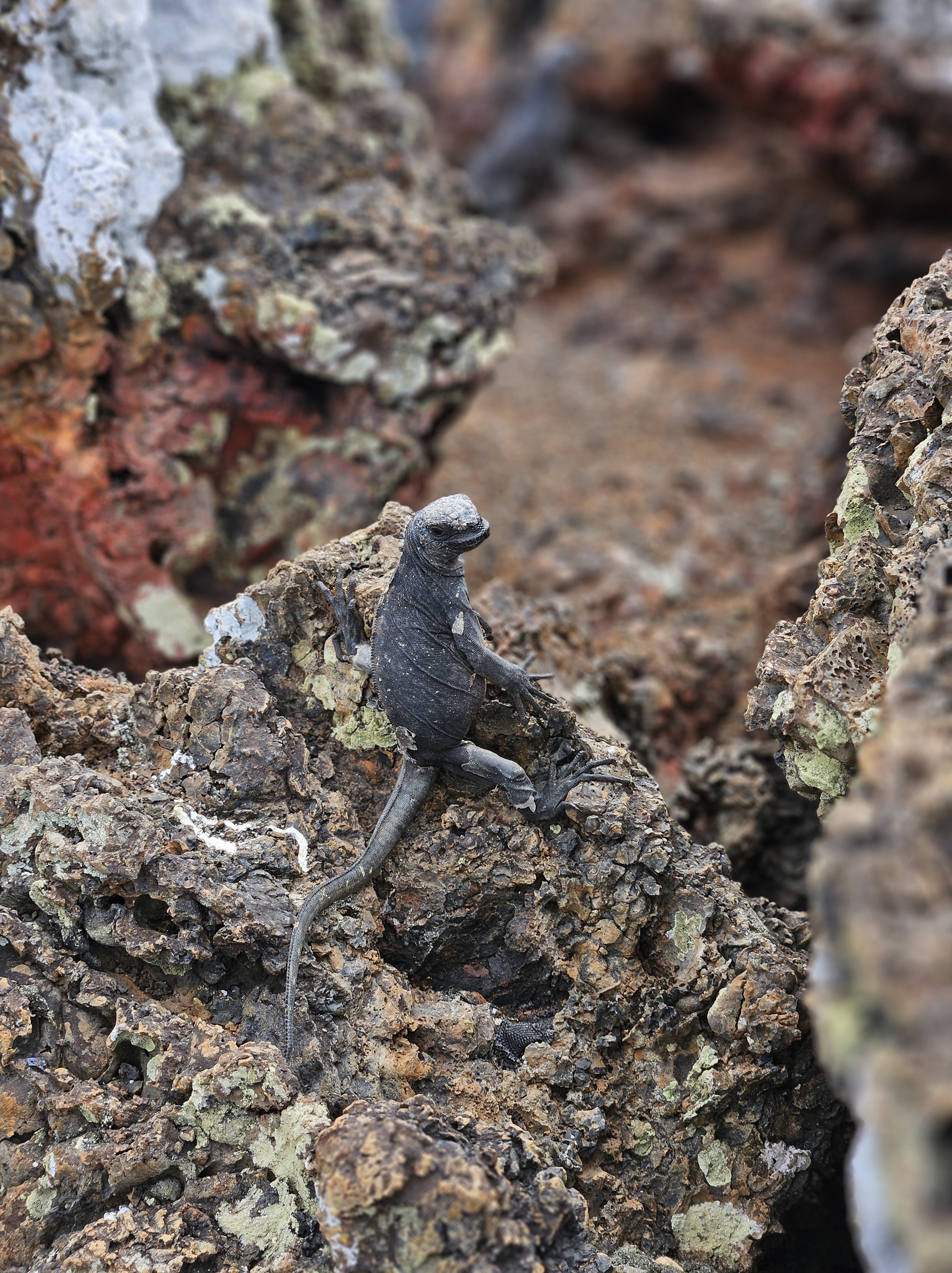
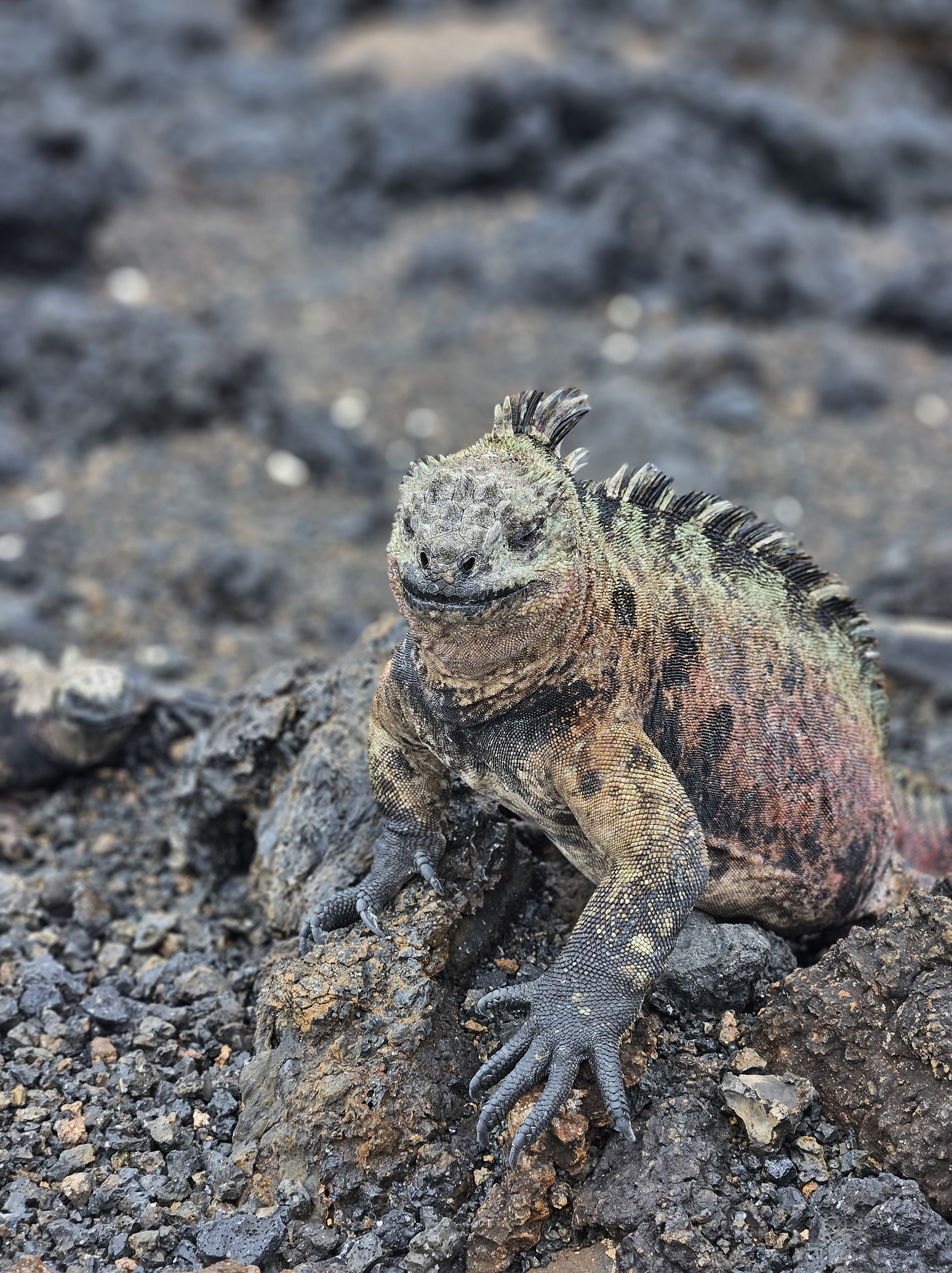
We disembarked on Islote Tintoreras, and stepped into the land of mini-godzillas. The iguanas were everywhere! Cesar also showed us different components that made up the ground, like coral and lava glass. My favorite was dried up sea cucumber spines. He told us that when he was growing up, before they brought chalk over, his teachers would say- okay everyone go get 5 sea cucumber spines for school today. All his classmates would go to the beach and make sure they had their school supplies ready, because the dried spines function just like chalk. Cesar is a very serious guide, so I believe him. We also saw an iguana skeleton, and seeing their teeth was interesting- they are shaped like a “w” which helps them scrape algae off of rocks!
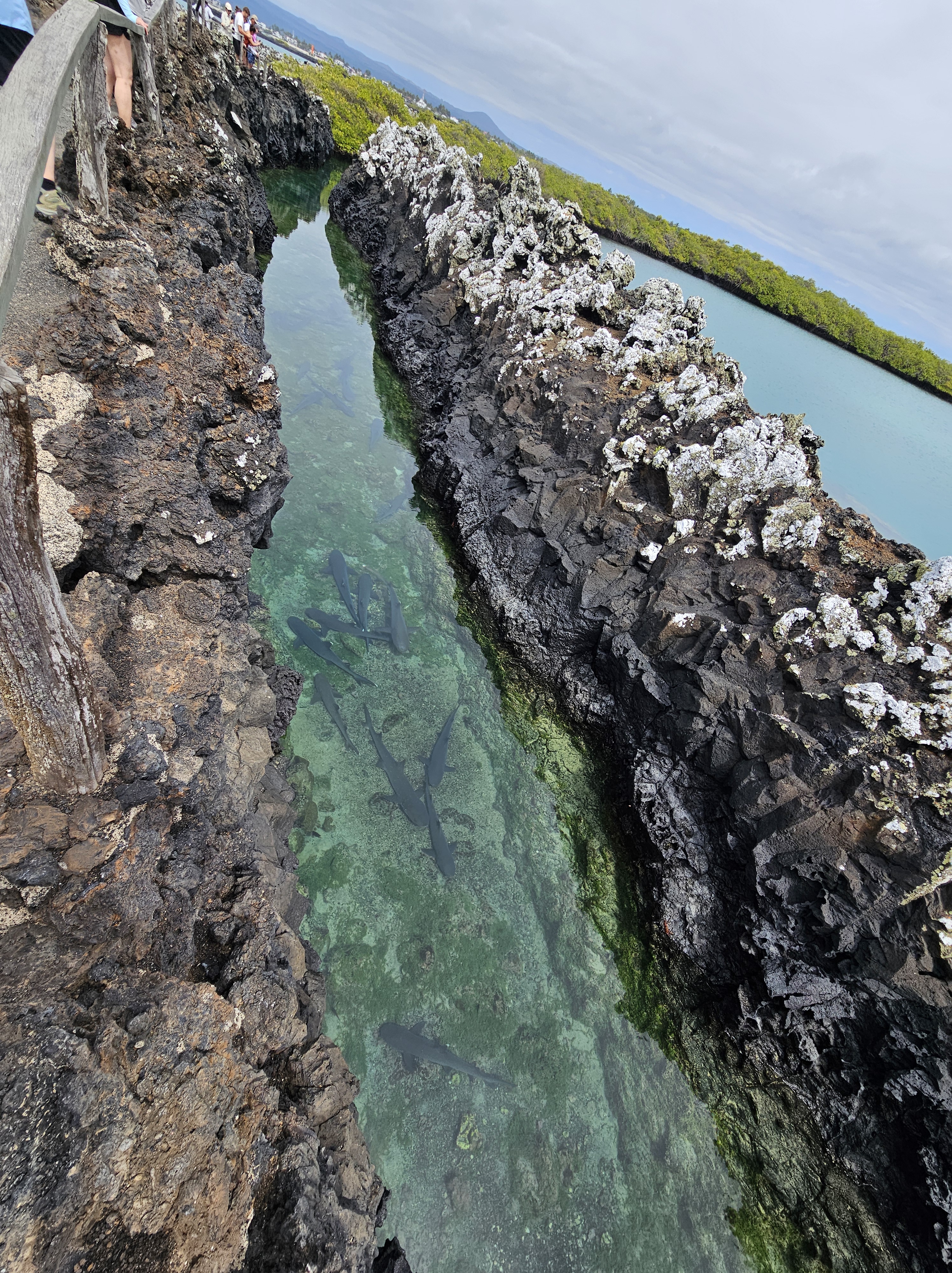
As we were closing the tour of Tintoereras, we walked by shark alley- and saw about 40 white tipped reef sharks just hanging out. They get trapped in there when the tide goes down, so they just wait until the tide comes up to leave. Cesar said there is usually about 5, so we were lucky to see so many.
After lunch we stopped at a little pond to see some flamingoes before heading to the Giant Tortoise Breeding Center.
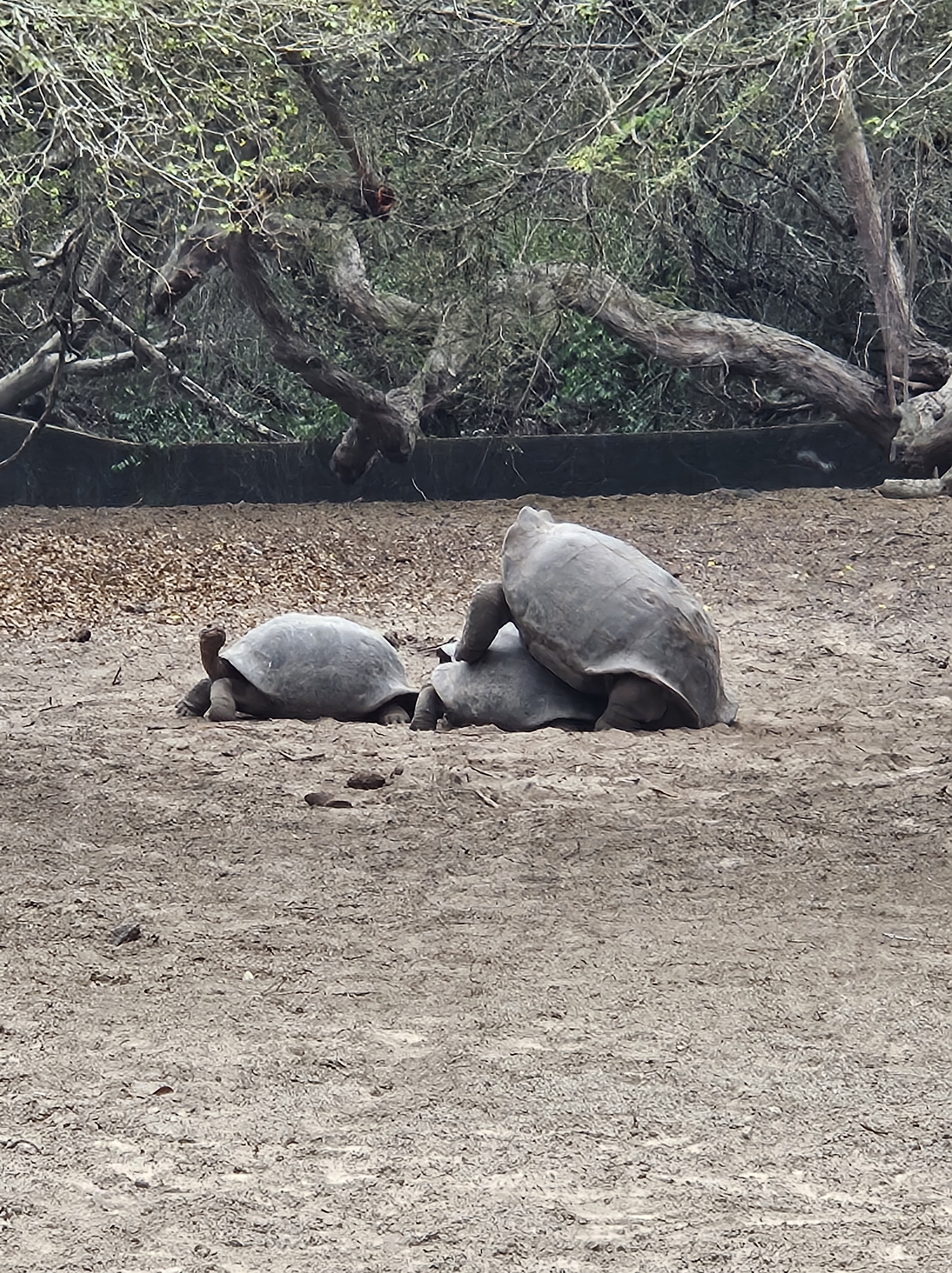
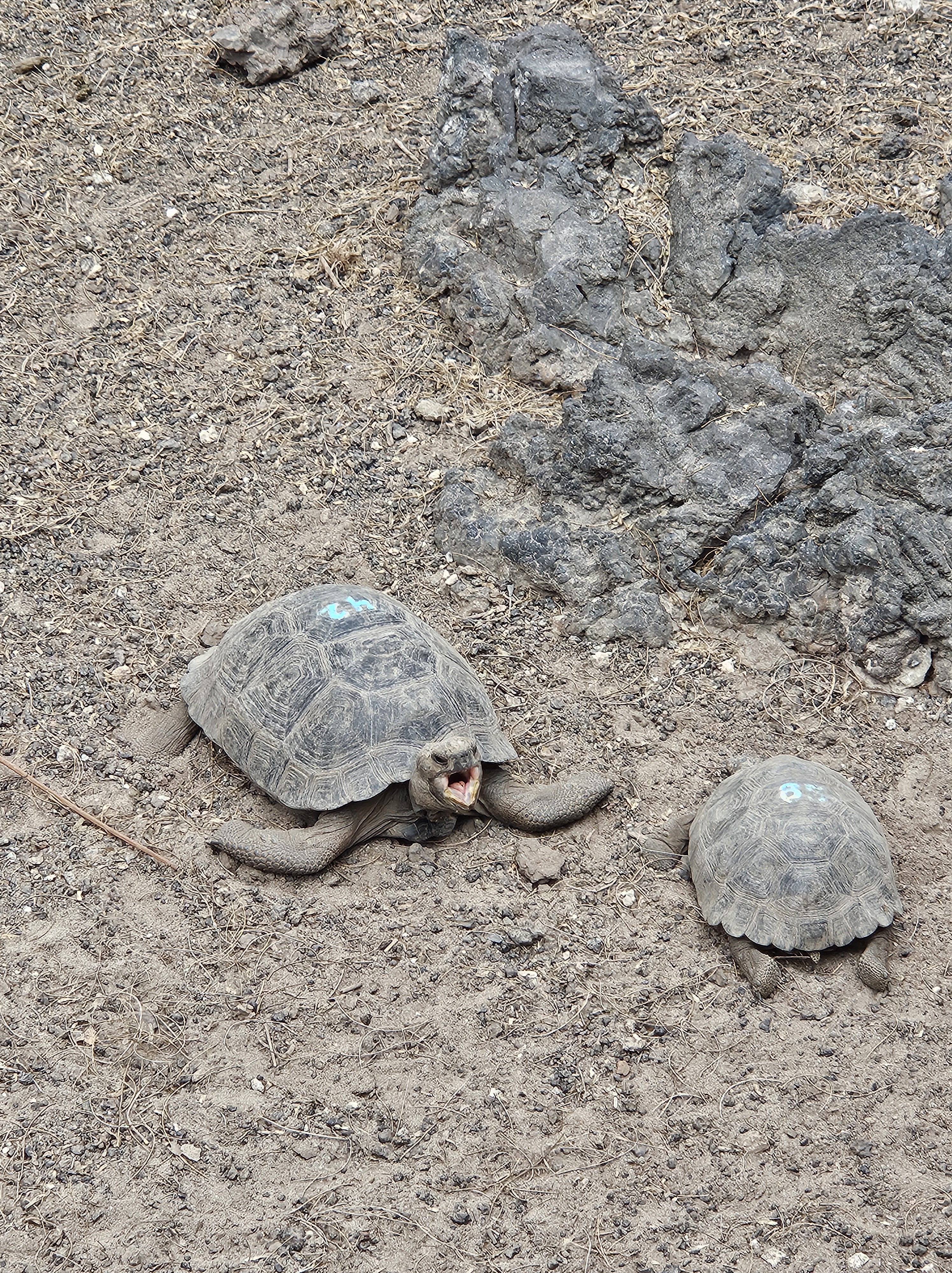
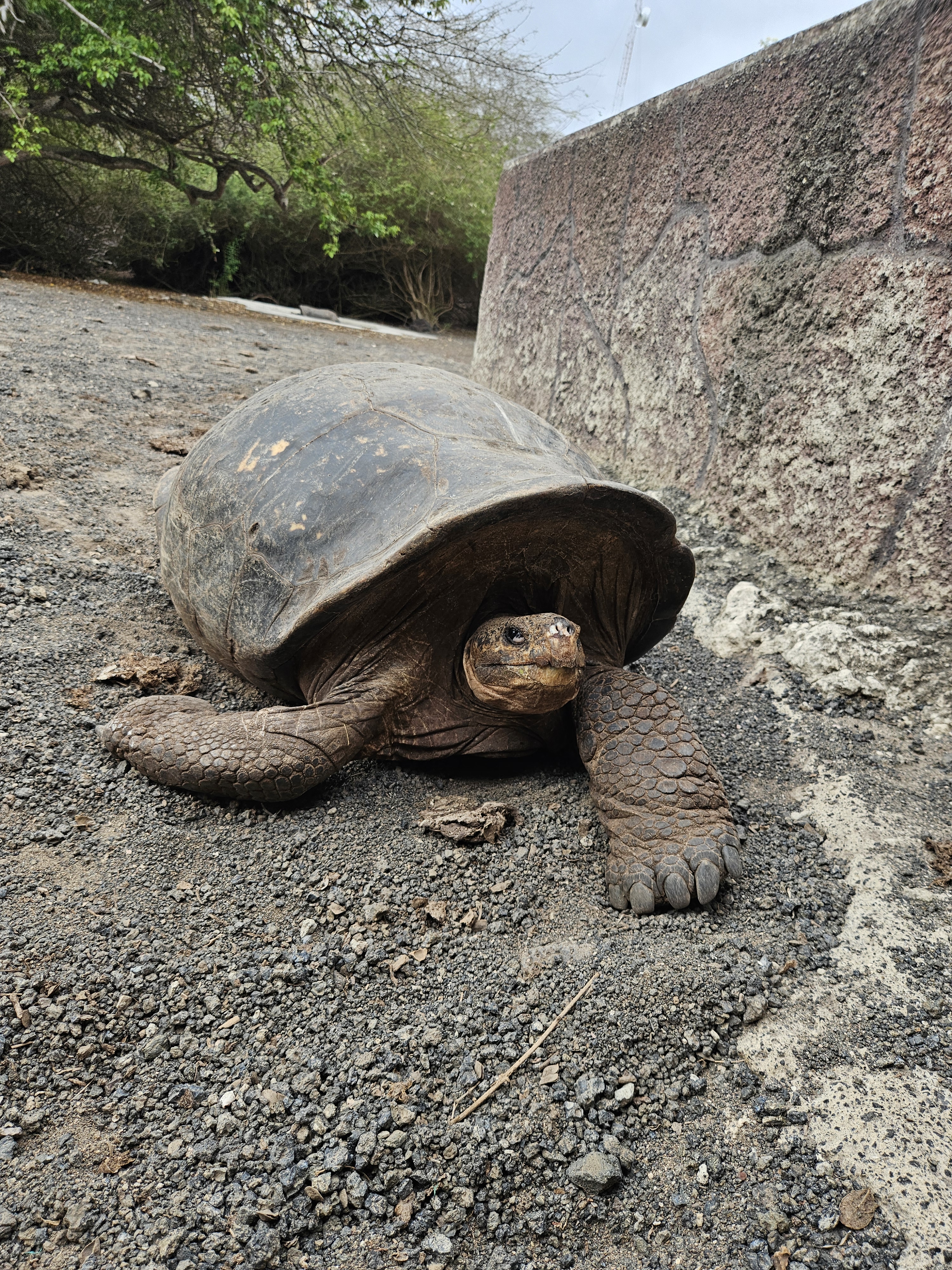
Galapagos Giant Tortoises are an endangered species, so the Galapagos and the National Park is working hard to prevent them from going extinct. Enter the Breeding Center. There is a pen at the front with 11 giant tortoises that are over 100 years old! Cesar told us the story about how these 11 were saved. Some years ago there was a volcanic eruption about to happen, and many giant tortoises make their homes in the highlands. A group of islanders got together and rescued as many as they could- which are the 11 that we have there today. I just picture all of these people carrying these tortoises down the volcano on a stretcher. I’m sure they were more efficient about it, but they are heroes in my mind!
The little ones in the middle picture are actually 5 years old, and were only days from being released into the wild! The breeding centers keep them for 5 years so that their shells harden and they have a better chance. Even then, Cesar said about 42 of 100 who are released will survive to breeding age.
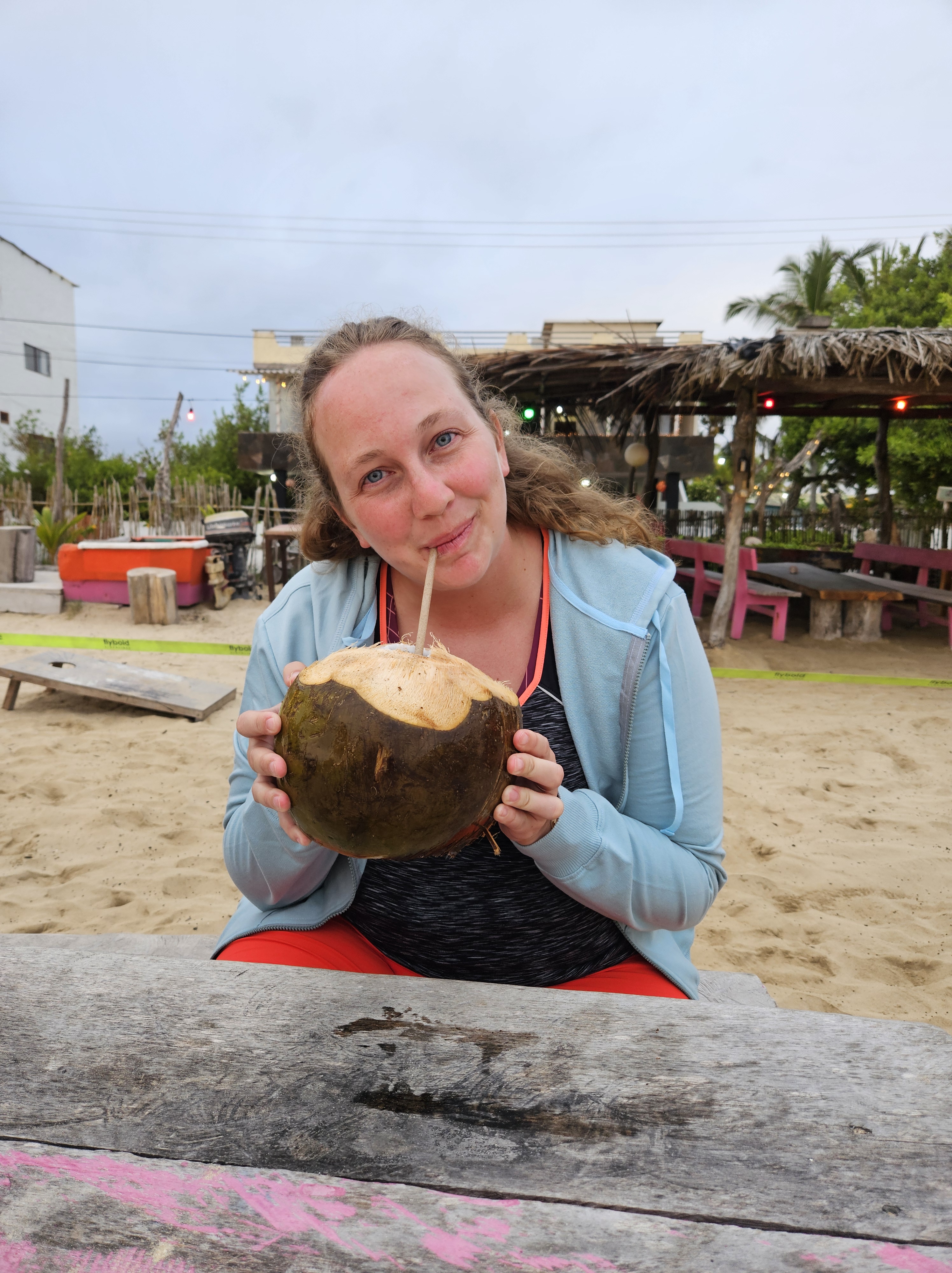
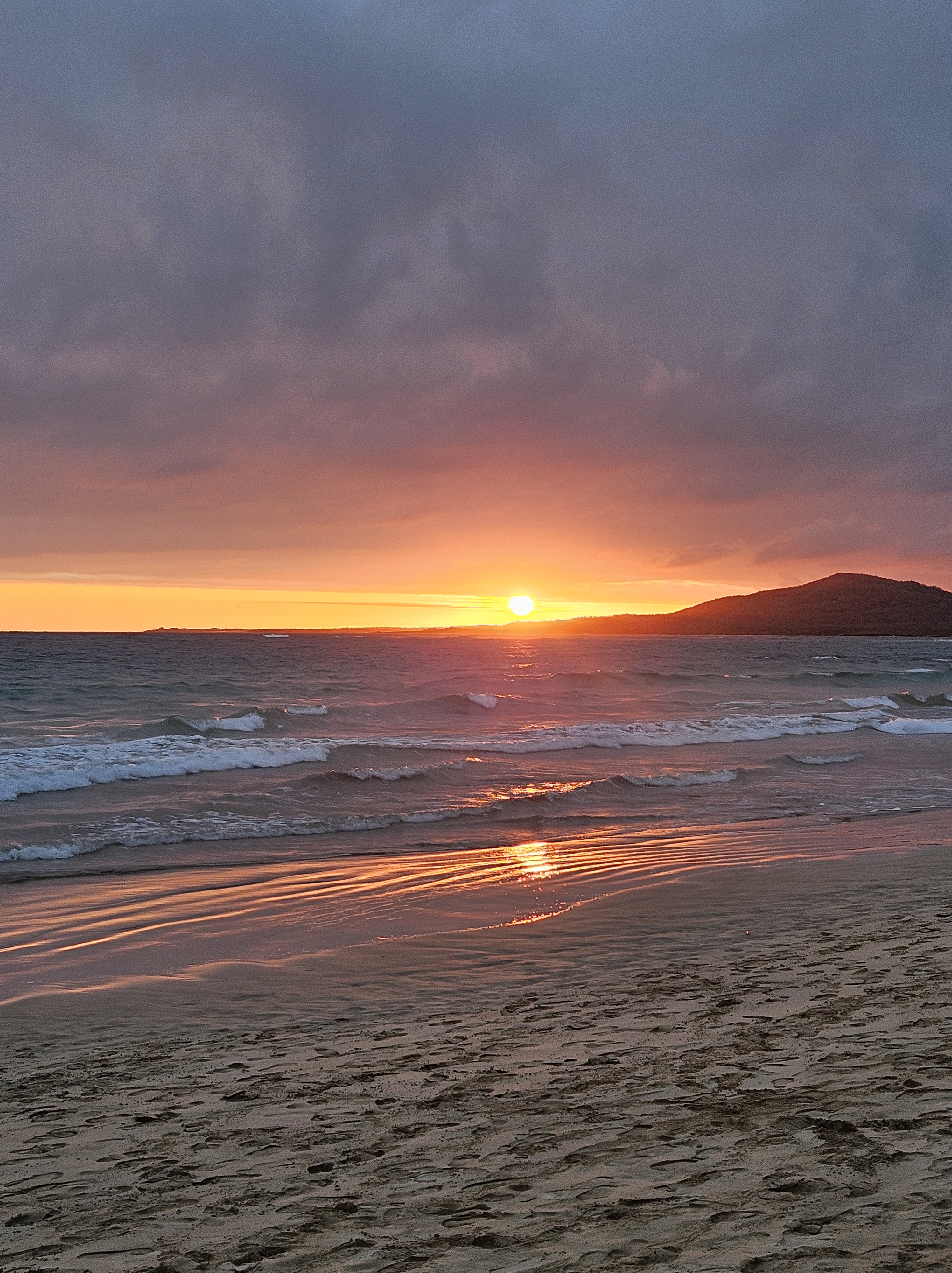
A pleasant walk from the breeding center to the beach, we arrived at the perfect spot to watch the sunset- the Pink Iguana Bar. I had a coco loco- a coconut filled with caña (sugar cane alcohol). I was really glad our group got along so well. There were 7 of us, so it was smaller and cohesive.
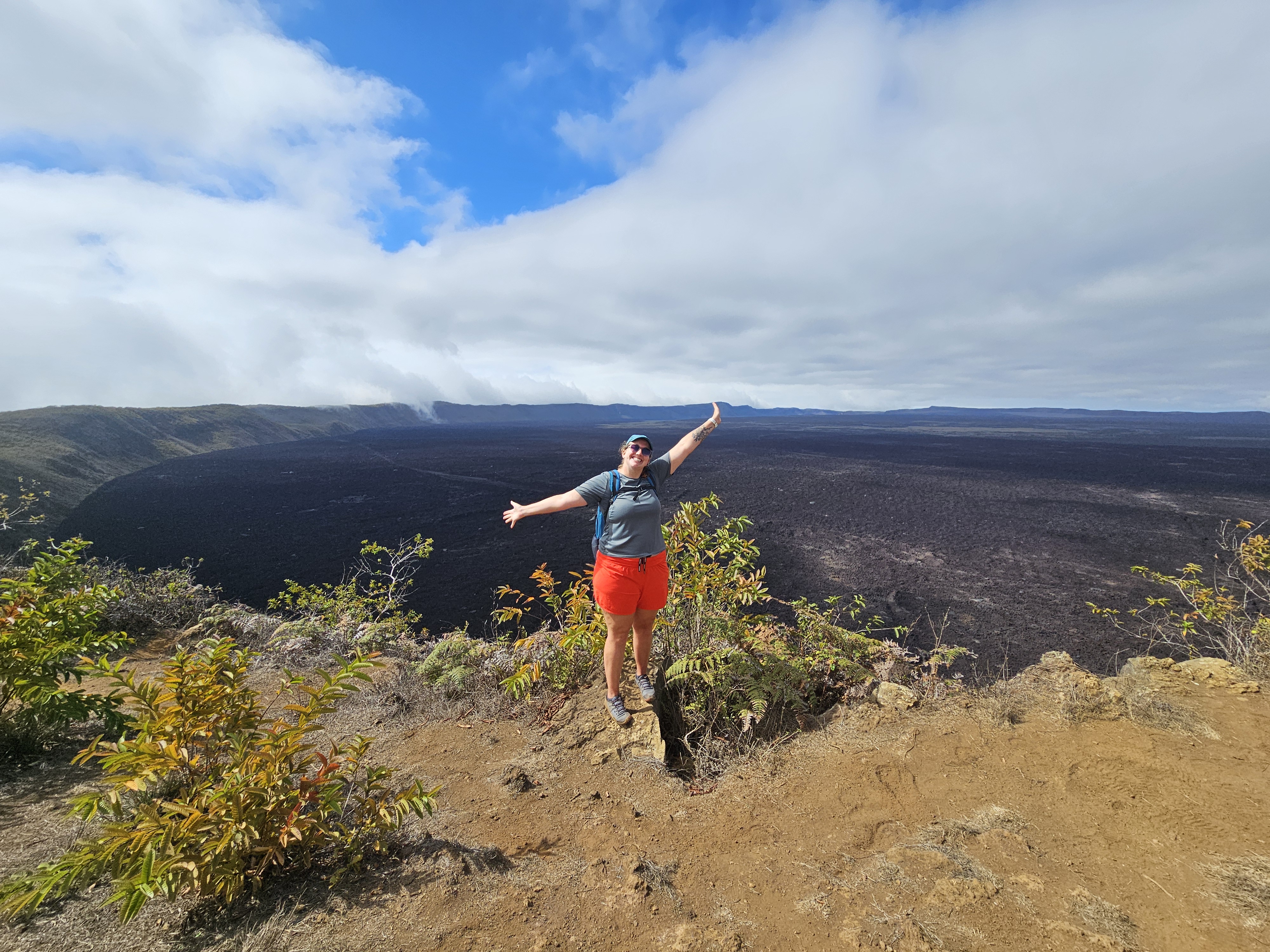
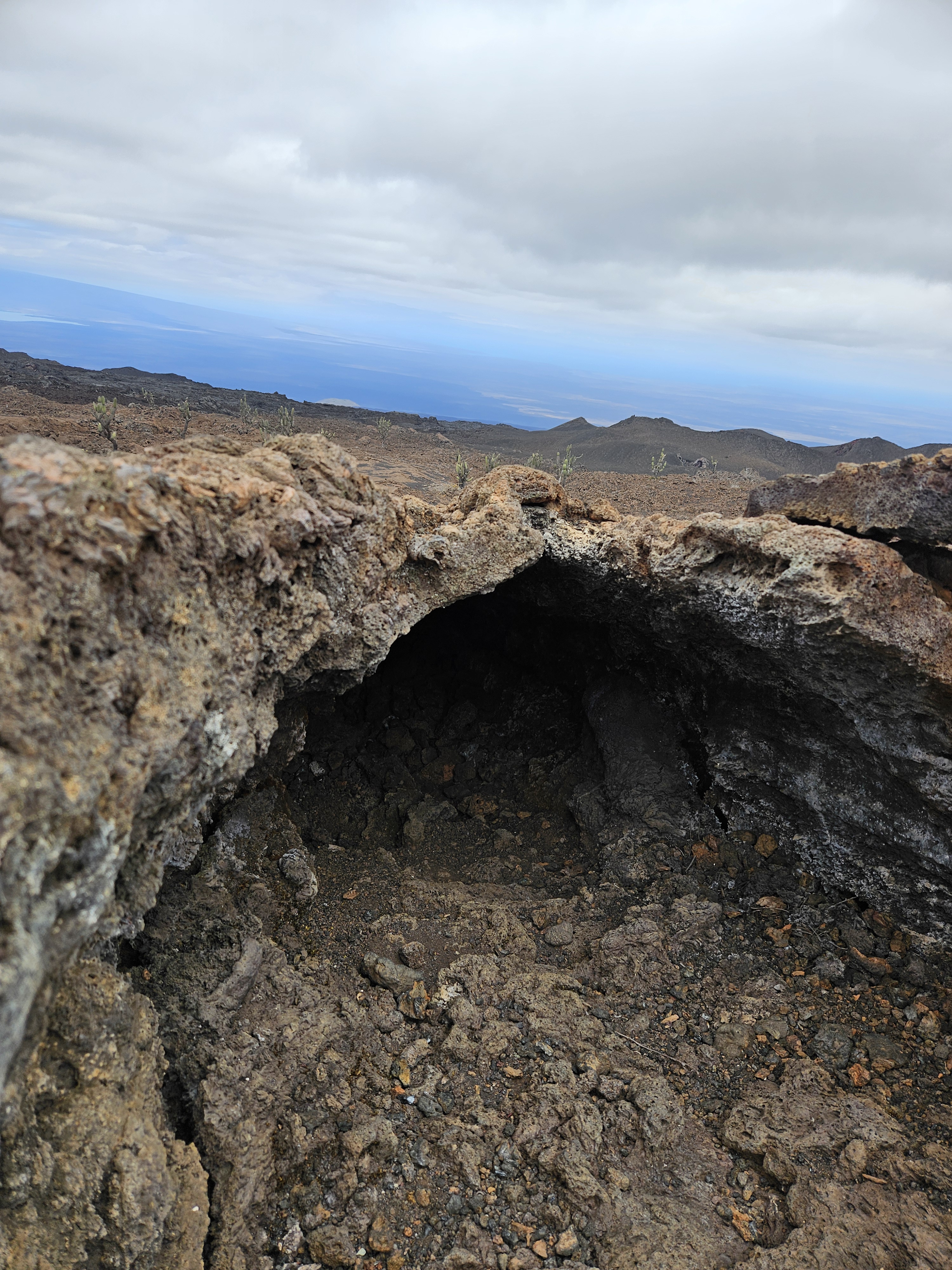
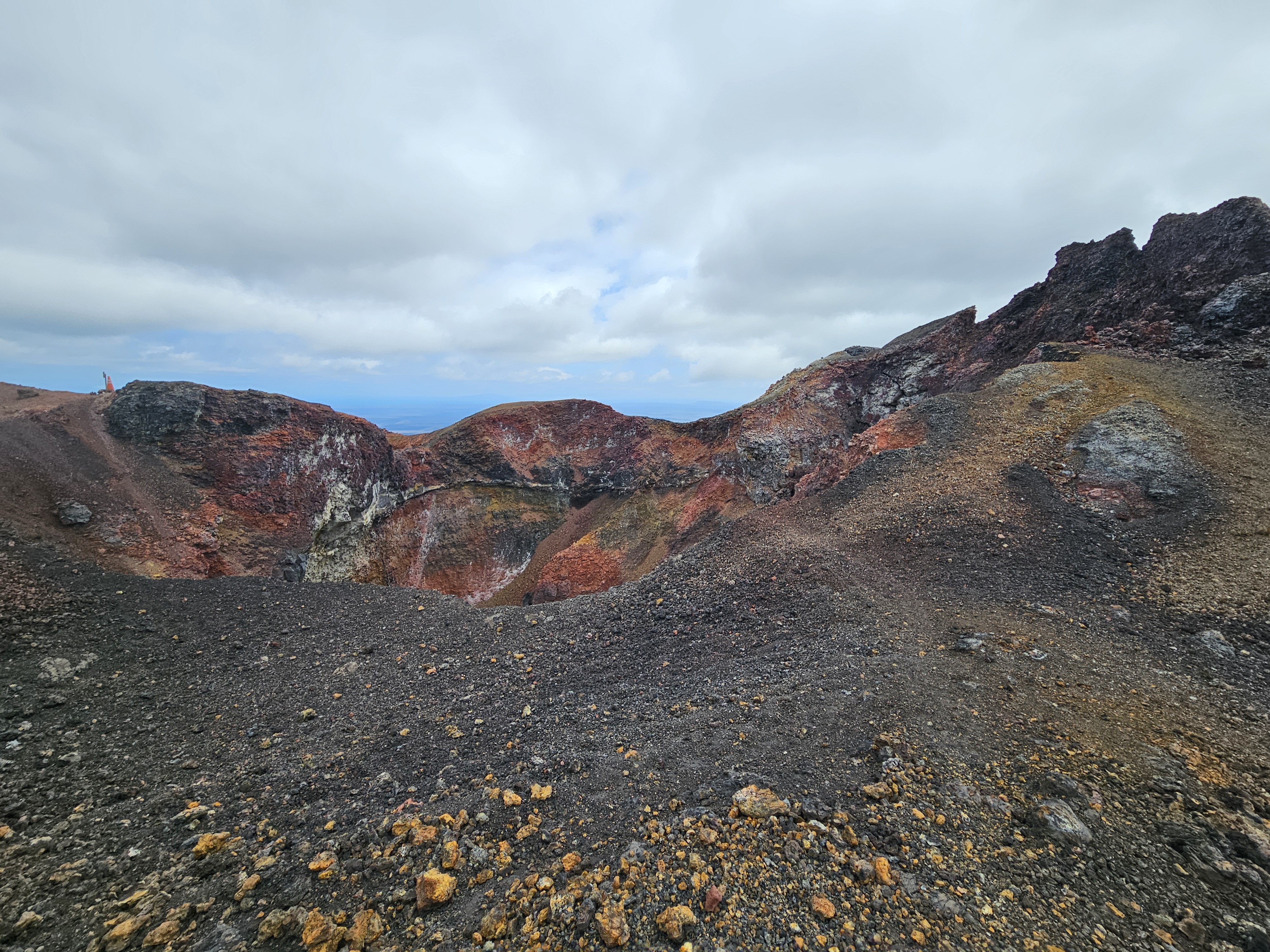
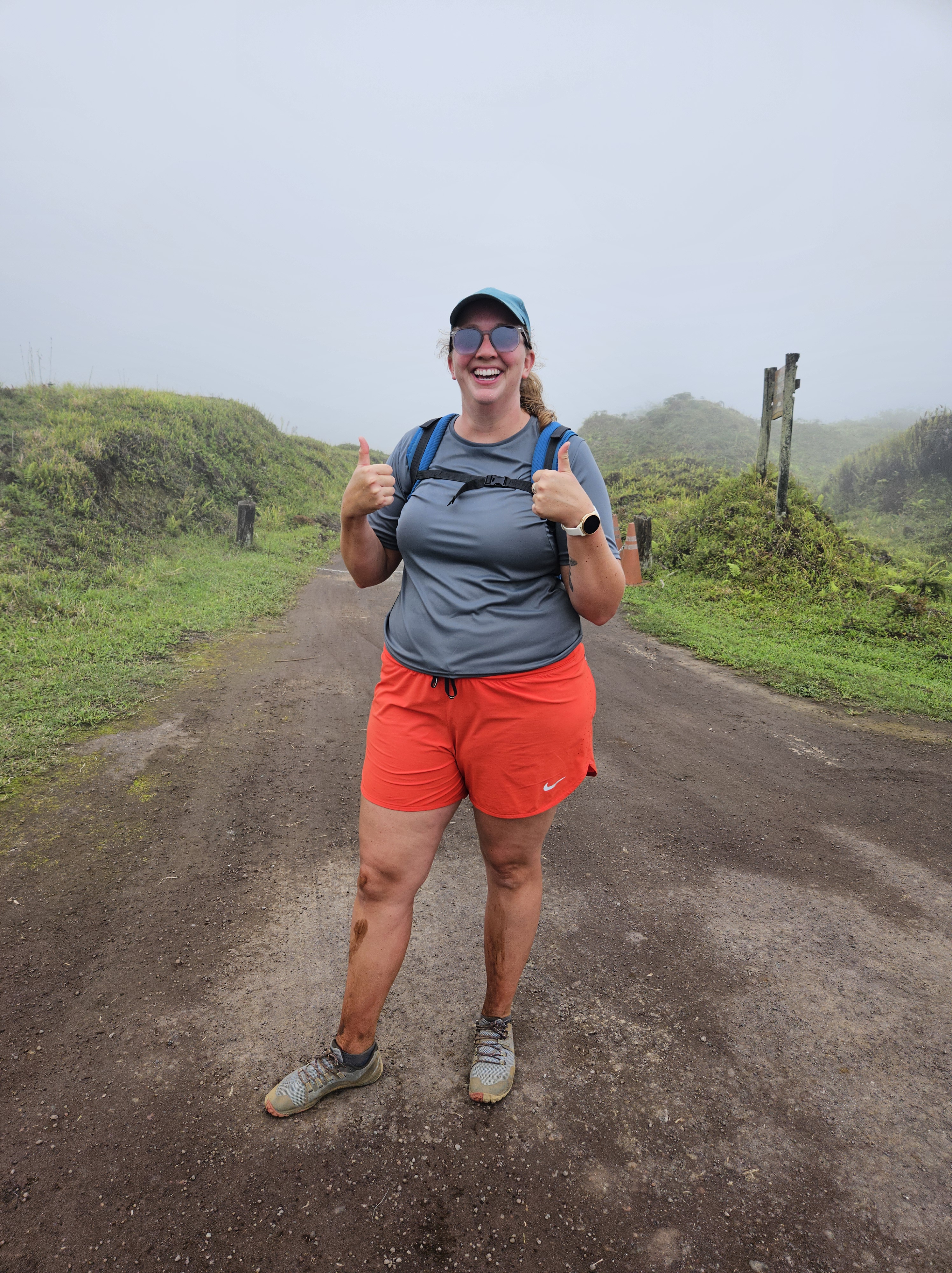
Our final full day on Isabela was spent hiking up Volcan Sierra Negra, and Volcan Chico. It was a 15km hike altogether with some incredible views. Volcan Sierra Negra is the world’s second largest crater on a shield volcano, and the picture doesn’t do it justice. I don’t think you can even see both ends of the crater when you are standing there.
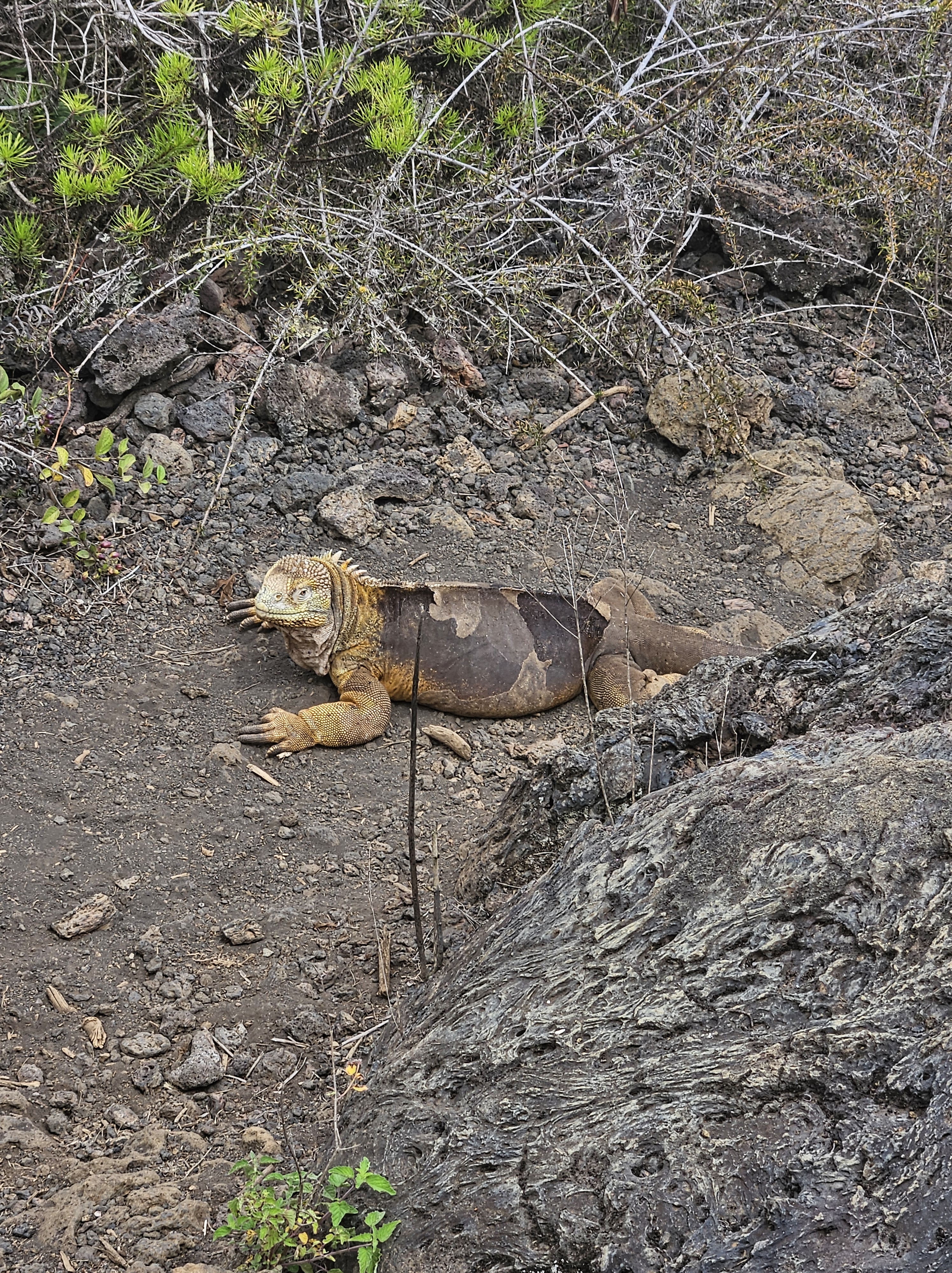
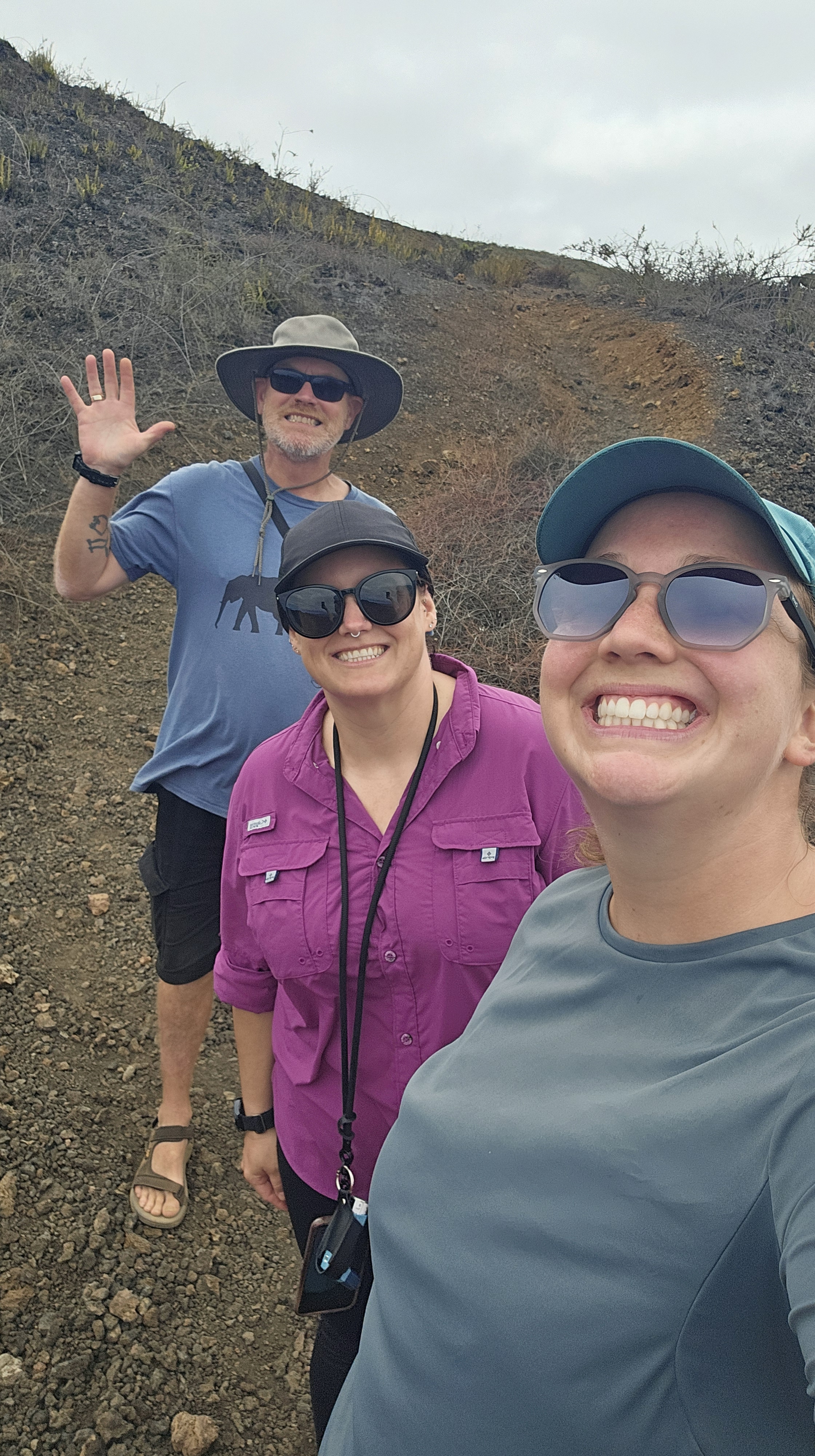
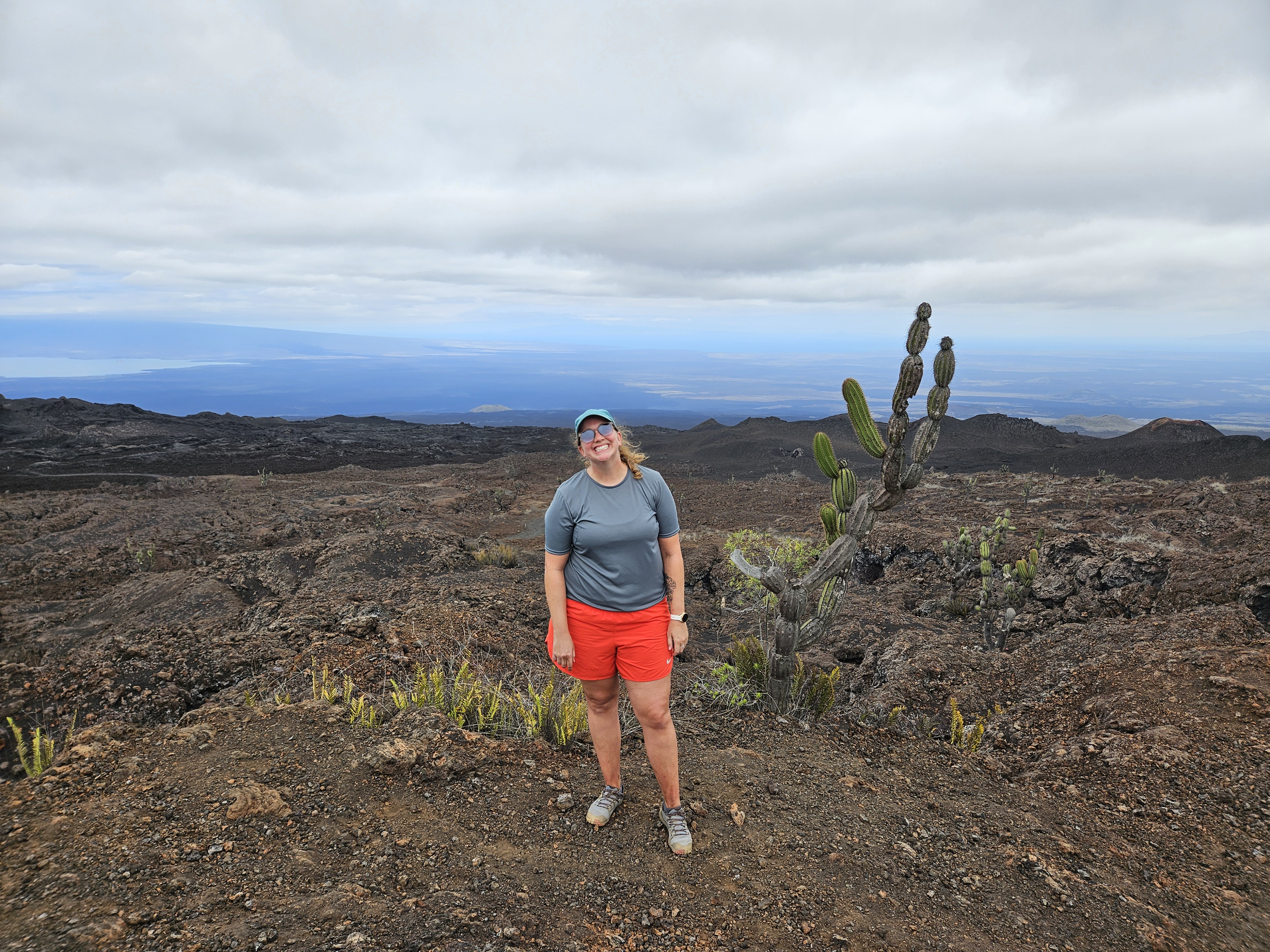
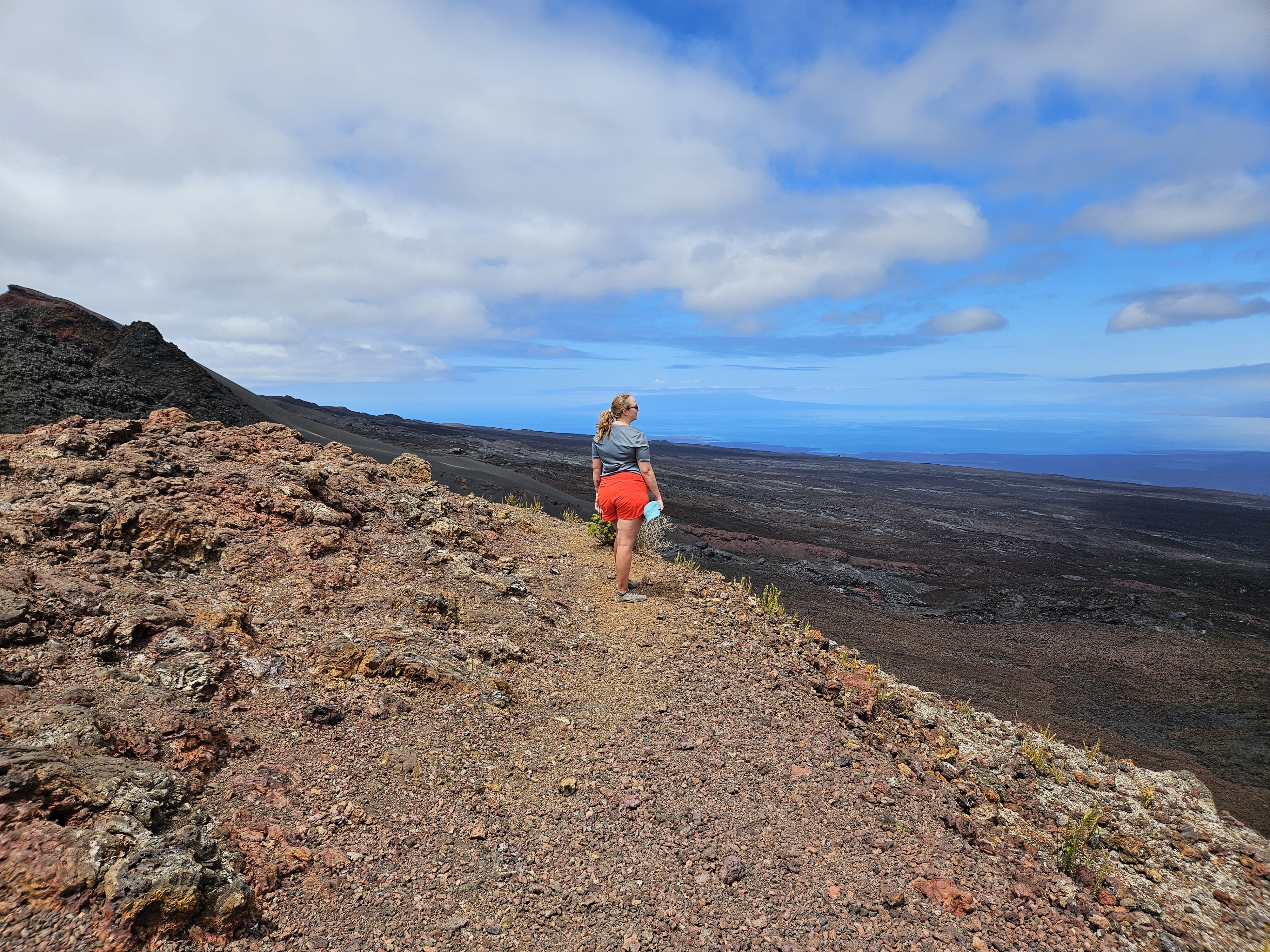
On the hike to Volcan Chico, we saw our only yellow land iguana of the trip! Cesar was very excited because these sightings are rare. As we kept walking, the landscape started turning lunar. We passed by a few cacti, but then it became rock. I loved seeing the lava tubes that are specific to this type of volcano as well. Hannah and Chris and I walked together because we were slower. Actually, I think I was the slowest and they were just hanging with me. This is something I have learned about myself- I am a slow hiker. Especially on unstable rocks, I just like to take my time. I like to take pictures and enjoy the view, and on the uphill, I like to catch my breathe. I’m not self-conscious about my speed, but I was really glad I had people to chat with and made the entire day more enjoyable.
From the top of Volcan Chico, we could see the other volcanoes that make up Isla Isabela in the distance, and another mini island off to the side. The clouds were covering it a little bit, but it’s cool how Cesar’s explanations of how the tectonic plates shift really show up right before your eyes! The entire hike was very dusty, and when we got back to the bus I had very “tan” legs, haha.
We had a free afternoon, and Hannah and I did the optional (free) snorkel at the Perla de Concha that Cesar had shown us. It was packed with people! We also felt lucky because a lot of the tour guides were just saying to their groups- okay hop in, I’ll be here, when Cesar always guides us and shows us stuff. (Brushes off shoulders for getting incredibly lucky with our guide.) During the snorkel it was nice to just float around a little bit in the water after a tricky hike. We saw a few sea turtles, a ray, and a puffer fish the size of my forearm. I got along really well with Hannah- she’s from Australia and it feels like we have very similar senses of humor.
Our group reconvened for a trip to the local brewery- Zaroa for a flight tasting of island brews. They make really cool flavors, like passionfruit beer, coconut beer, or even lemongrass. We played Jenga and had a few beers before heading over to a grill restaurant. It was a perfect way to recover after a long hike up two volcanoes. (I did 29,011 steps that day.)
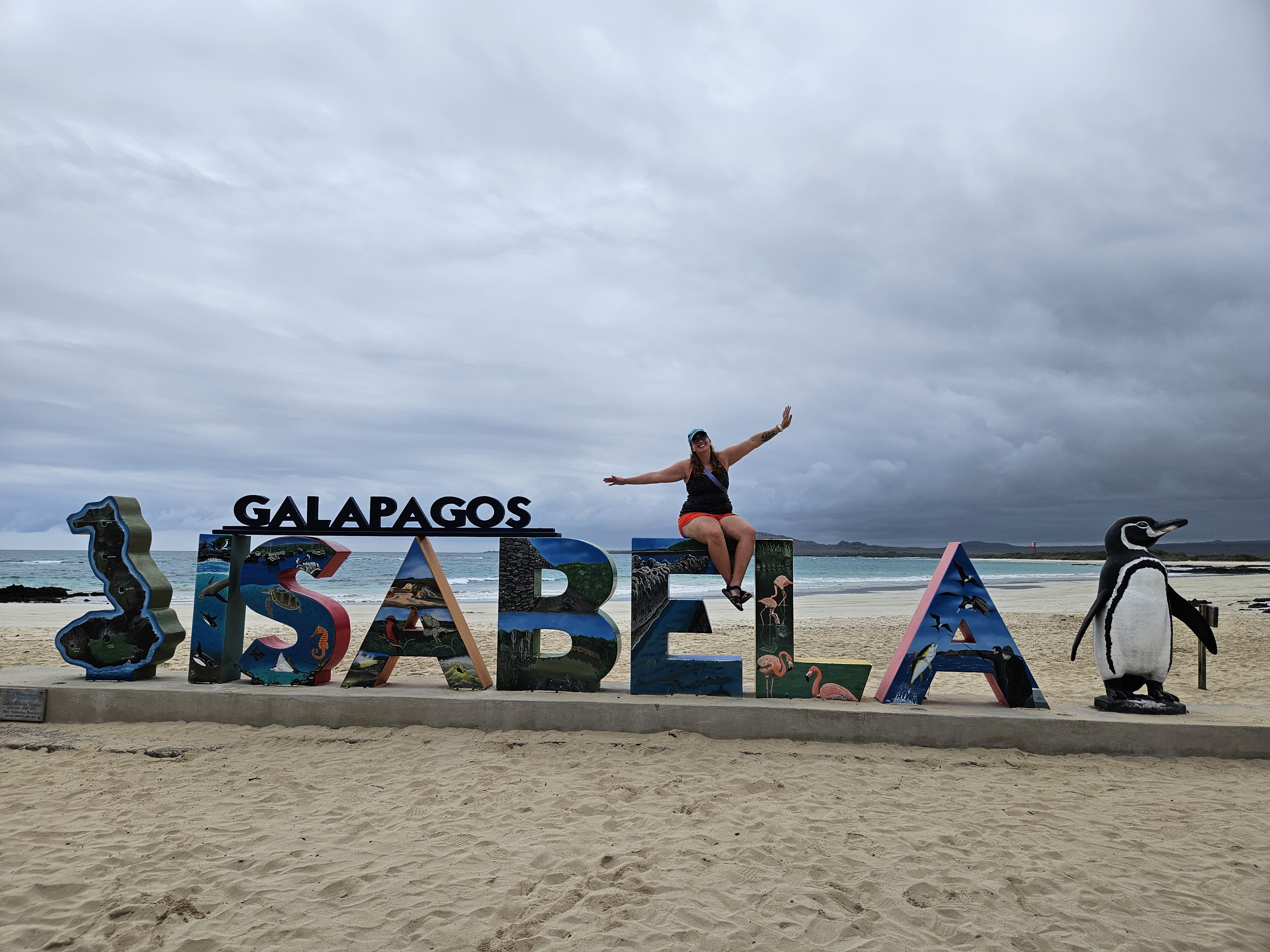
Isabela was a unique island that had a lot of different types of activities to it, and I really appreciated that. Next up, we headed to Santa Cruz!
 seekingmygreaterperhaps
Leave a comment