Thus far on this blog I have yet to mention anything about the purposes for me being in Beijing. I may have talked about the seminars we hosted at Beijing Royal School, which were well received, but nothing yet about the rest of the time. During the time at Beijing Normal University we hosted another seminar on cross-cultural themes. We also toured around the counseling center as well as 2 other universities. This post is dedicated to what I’ve learned through my lens as a future school counselor while here in Beijing. There is a post coming in the future when I will enlighten anyone who wants to know about more of the specific cultural dynamics at play. 🙂
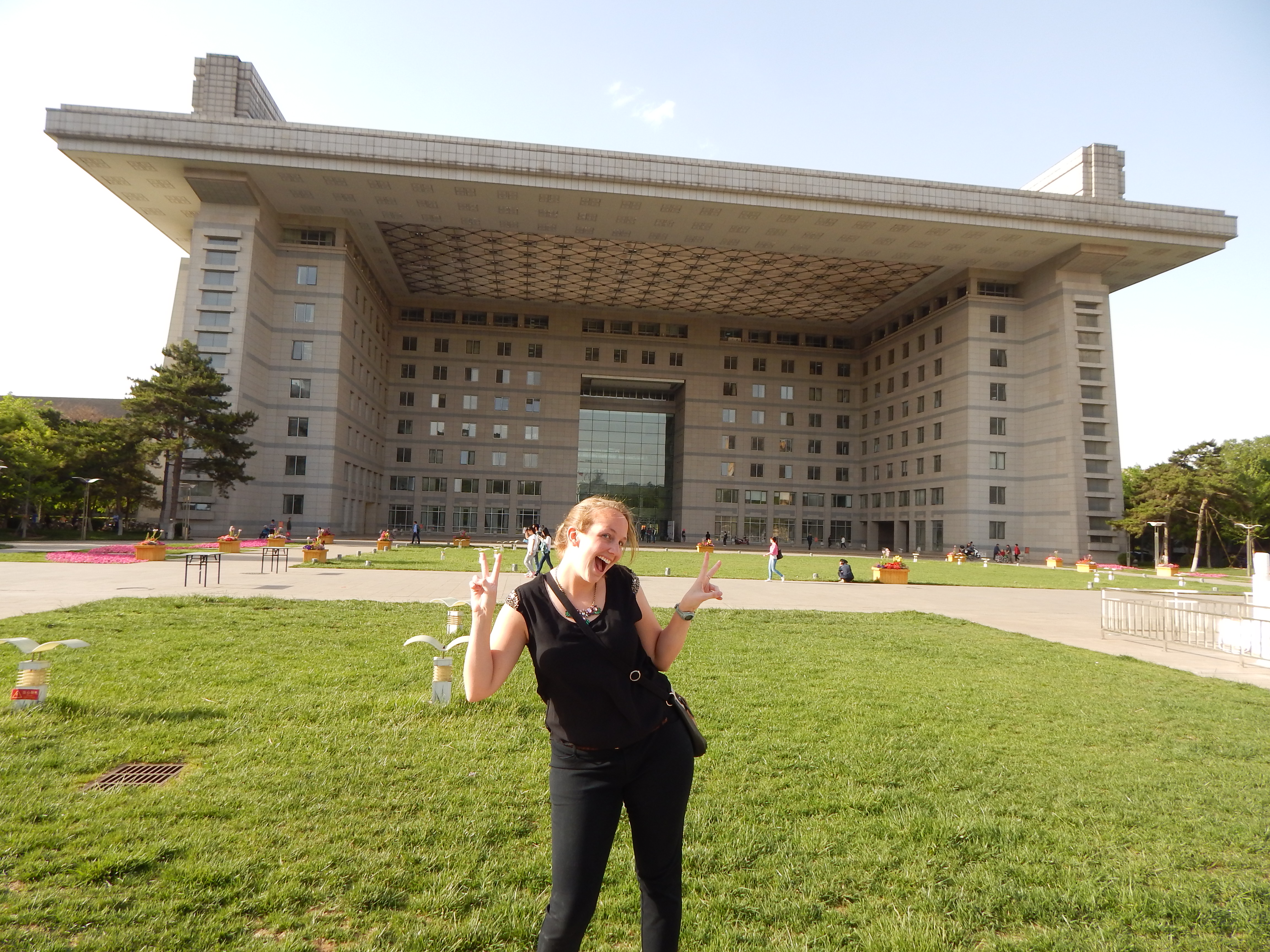
This is Beijing Normal University. After a day of giving presentations and touring the psychology department and counseling centers, I was a bit loopy. It’s a nice campus, much much smaller than IU Bloomington, but most campuses are. There are some pockets that smell like bathroom, but I’m learning that’s most of China. Student’s appear focused and head into classrooms without much interaction with each other, and there doesn’t seem to be a lot of school spirit, but again I was pretty segregated from most students.
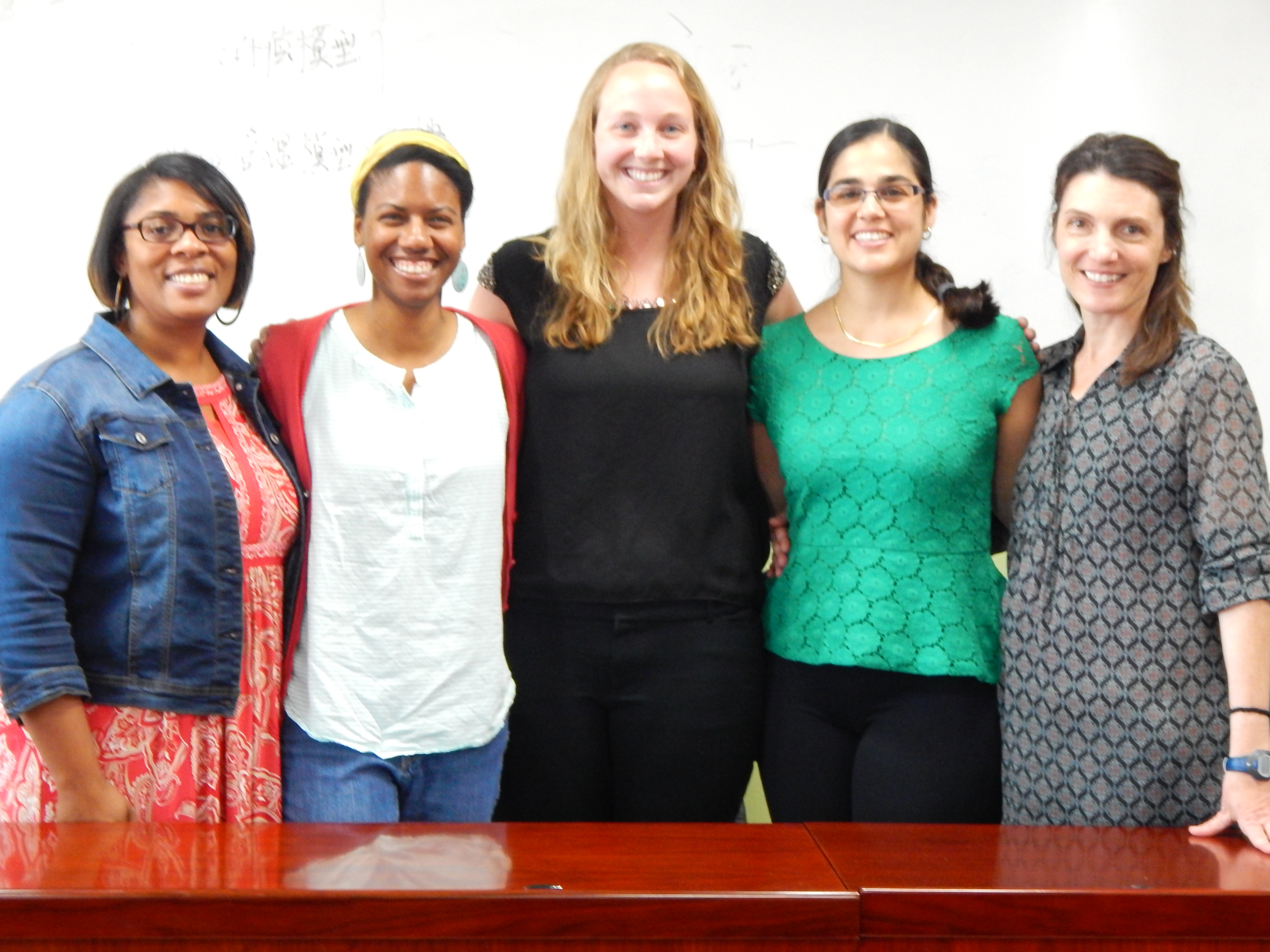
Laysha, Brye, Michaella, Brandy, Melissa. This is our counseling group right after we gave our last presentation. The presentation was about cross-cultual themes and how a Chinese student may see coming to America, and then on the reverse, how we have experienced China thus far. They were very intertwined, as customs for Chinese are things we notice because they are different. If that makes sense. Here are some examples.
- Personal space: elevators in China are a game of “let’s see how many people we can cram in here.” Subways are the same and even standing in line at the grocery store, people will be directly behind you, probably touching your butt. No one thinks any differently, whereas in the US people have a pretty defined personal bubble.
- Meals: they are meant to be shared and taken calmly with lots of relaxation and time spent to enjoy the food. They are often family style and people share in all dishes, whereas in the United States people will order their one entree and be done with it.
- Family: with China’s one child policy, many family dynamics are different. There is one child that is the focus of all parental and grandparental attention, which may churn out well-rounded children or self-centered children. In the US, we don’t have restrictions and many families have multiple children which also affects family dynamics.
- And more.
In the workshop, we broke into small groups and had discussion between Chinese students and American students, which we then explored in the larger group.
During their presentation my biggest take-away was that students who go into postgraduate studies in applied psychology have little interest in becoming a practicing counselor, but rather do research. Research, I learned, is a more respected field than being a counselor, so that’s where students set their sights. I personally have 0 interest in research, so this was eye-opening for me. Becoming a professor is higher ranked in society and more Chinese students go there rather than applying their knowledge.
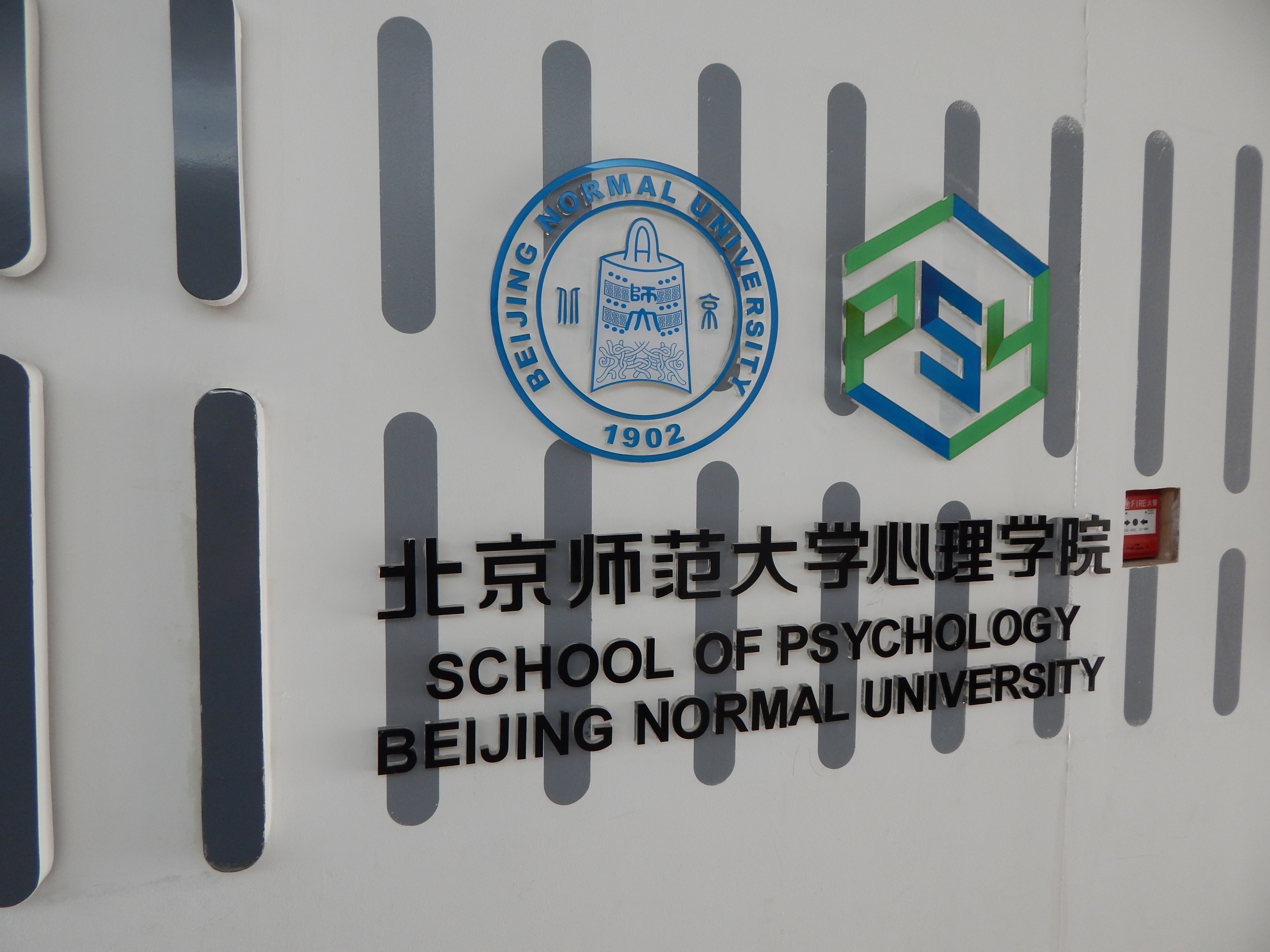
Frannie then took us on a tour of the Psychology department and all of their labs. Some of them were just rooms with computers in them, but some of them were awesome with EEGs, a Google Earth interactive reality (where you used your hand and they measured your ability to adapt your spatial orientation. We played with it and were able to find our universities after starting in China, it was impressive.), and even a sand-tray play therapy room.
She then took us to the building that is currently under construction where the new counseling center will be. It was creepy because the lights aren’t installed yet and we had to use our phones for flashlights. It did’t seem quite safe and I felt like I needed a hard hat and proper footwear, but it was important for BNU to show the Americans how much money they were investing into a counseling center. China is all about show and names and being the best at things, so this is an important part of their culture. They value counseling, so they are showing that by creating nice places for counselors to work. (Which is a change, as counseling is still in development in China.)

That’s Greensboro! I found it on Google Earth!
We also met with the current college counselors at BNU and had the opportunity to tour their facility as well as speak with them. They have candy in all of their counseling rooms, which I found as a bonus. In China they have an interesting role because there is another person we don’t have in the US. An advisor is someone who checks in on the student and ensures they are keeping up with classes and learning how to cook and more emotional needs. If the advisor runs across an issue they can’t handle, they then refer the student to counseling. This is an interesting position brought on, I think, by the 1 child policy. Students were babied at home and then sent to school and the parents assume they know how to be an adult, when in fact the students don’t even know how to do their laundry. The advisor helps them with the life skills, from my understanding.
In the psychology hall they have a “Psychology Hall of Fame” with psychologists and major influential people in the field spotlighted. Laysha pointed out that not a single featured member is a woman or a person of color. It’s amazing how people who are marginalized do not appear as important enough to make history, even though there have been plenty of women and people of color to make an impact in the field. This may also reflect on the Chinese staff and who they choose to feature. China is not yet a country who is okay with feminism, and they discriminate against people based on socio-economic status rather than color. It was powerful and hurtful to realize that women are still not regarded as worthy of the hall of fame when most of the department of psychology at BNU is made up of women. I can only imagine how it would feel to walk through those halls every day and not see someone like me on the wall.
***
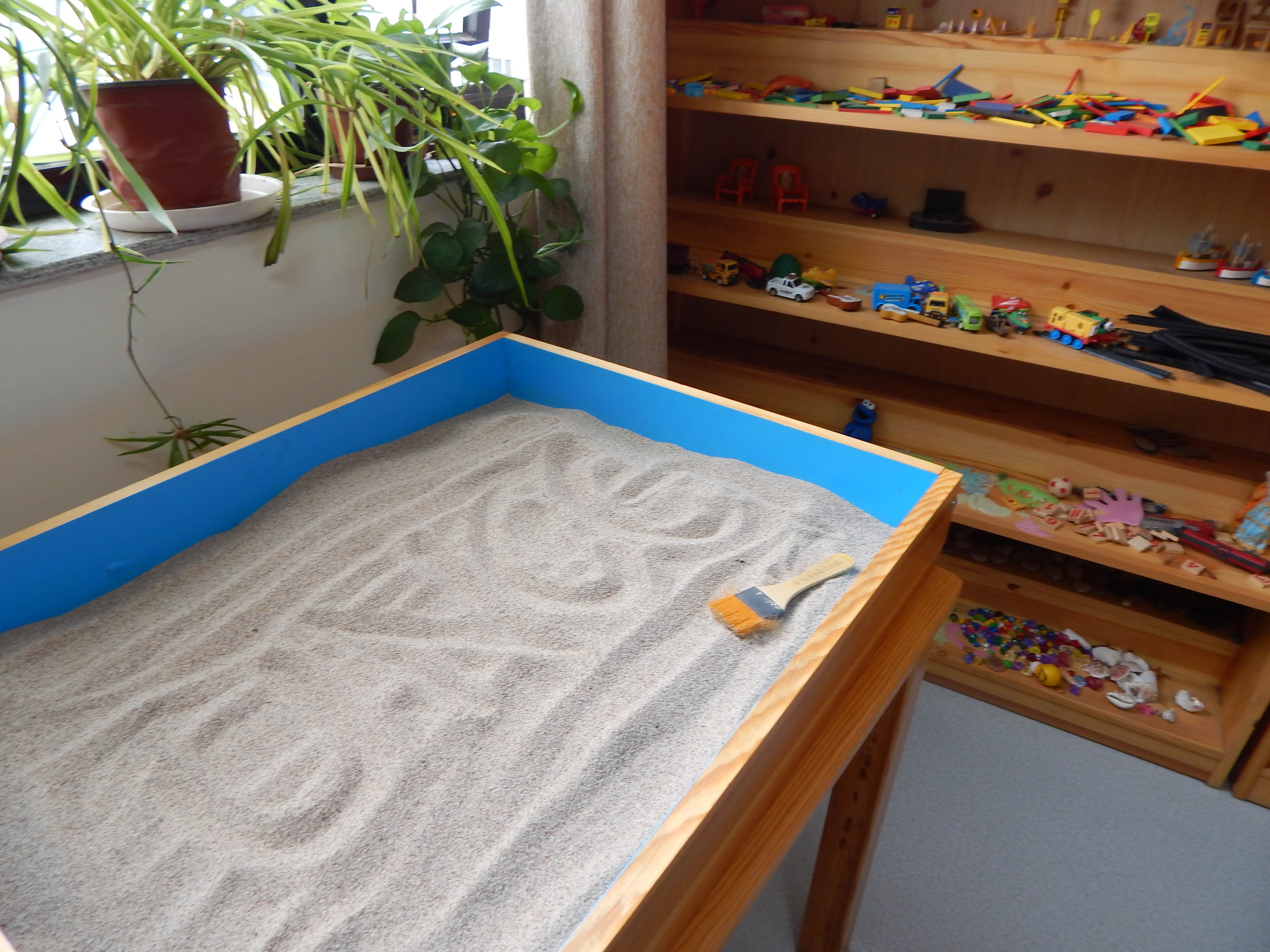
We also visited the counseling and career centers at Tsing Hua University and were able to speak with the director of the counseling center and had tea with her for a full hour. She is very intelligent, and would lean forward and speak boldly about things she was passionate about. It was clear she has a fire for her job, which was refreshing to see. I noticed that sand-tray is a big thing in China, and every counseling center has one, along with a large collection of toys. They have a lot of China specific toys, like a Buddha and a Great Wall, and other Chinese symbols that might come out in sand-tray.
In between we had enough time to walk to a mall for about 30 minutes and we were told to meet at 2 at a statue. Well, my professor was late and as soon as he got his ice cream, he walked straight to the taxis, didn’t look back for any of his students and hopped in to go to the next university. I was about 10 seconds away from being left at the mall and was fuming. He didn’t think about anyone but himself, which I thought was extremely inappropriate for being the one professor leading a group of students who do not speak Chinese around Beijing. When we arrived at the university, I let him know I was angry with him, which he did not like. He made excuses and never apologized, which left me even angrier. I’m over it now, but at the time I was fuming. This short story aside, that is my explanation for why I have no pictures of the next university.
Peking University was neat, and the walls of the counseling center were covered with student art. They have markers and paint available for anyone to contribute, which was a twist. I later learned some of the counselors use a more narrative approach, which makes sense for the walls. The session there was informative, but the room was hot, making us all a little sleepy.
In conclusion, the universities made for a great visit and a lot of knowledge was imparted onto us. All of the universities were “the best”- another hint at Chinese culture, and our professor gave many gifts of thanks. I’m thankful to know that counseling is becoming more popular in China, as I very much see the need especially with stressed out students under academic pressure.

 seekingmygreaterperhaps
Leave a reply to Sean Beatty Cancel reply